




Choosing the right exercise bike can make a big difference in how consistently you work out, how comfortable your workouts feel, and how effectively you reach your fitness goals. With so many types of exercise bikes available, finding the best exercise bike for home use isn't always straightforward. Some models prioritize comfort and accessibility, while others are designed for high-intensity training, performance tracking, or convenient everyday movement.
Whether you're building a home gym, looking for a low-impact cardio option, or hoping to recreate the energy of a studio cycling class, understanding the differences between exercise bike styles can help you make an informed purchase.
In this exercise bike buying guide, we'll compare upright, recumbent, and indoor cycling bikes, explore their unique features and benefits, and introduce a few alternative options worth considering. By the end, you'll have a better idea of which stationary bike best fits your fitness goals, available space, and preferred workout style.
Understanding the Different Types of Exercise Bikes
Although all stationary bikes provide a way to enjoy cardiovascular exercise indoors, their designs can create very different workout experiences. Riding position, seat design, resistance systems, and available features all influence how a bike feels and what types of workouts it supports.
The three most common types of exercise bikes are:
-
Upright bikes: Designed for traditional, seated cycling with a relatively vertical riding position. They're versatile options for everyday cardio and general fitness.
-
Recumbent bikes: Feature a reclined seating position, supportive backrest, and forward-positioned pedals. They're popular for comfortable, low-impact workouts.
- Indoor cycling bikes: Replicate the feel of outdoor road cycling with a forward-leaning position, adjustable resistance, and the ability to stand while pedaling.
Other options, including recumbent ellipticals and mini exercise bikes, offer additional flexibility for people with different training preferences and space requirements. Let's take a closer look at each type.
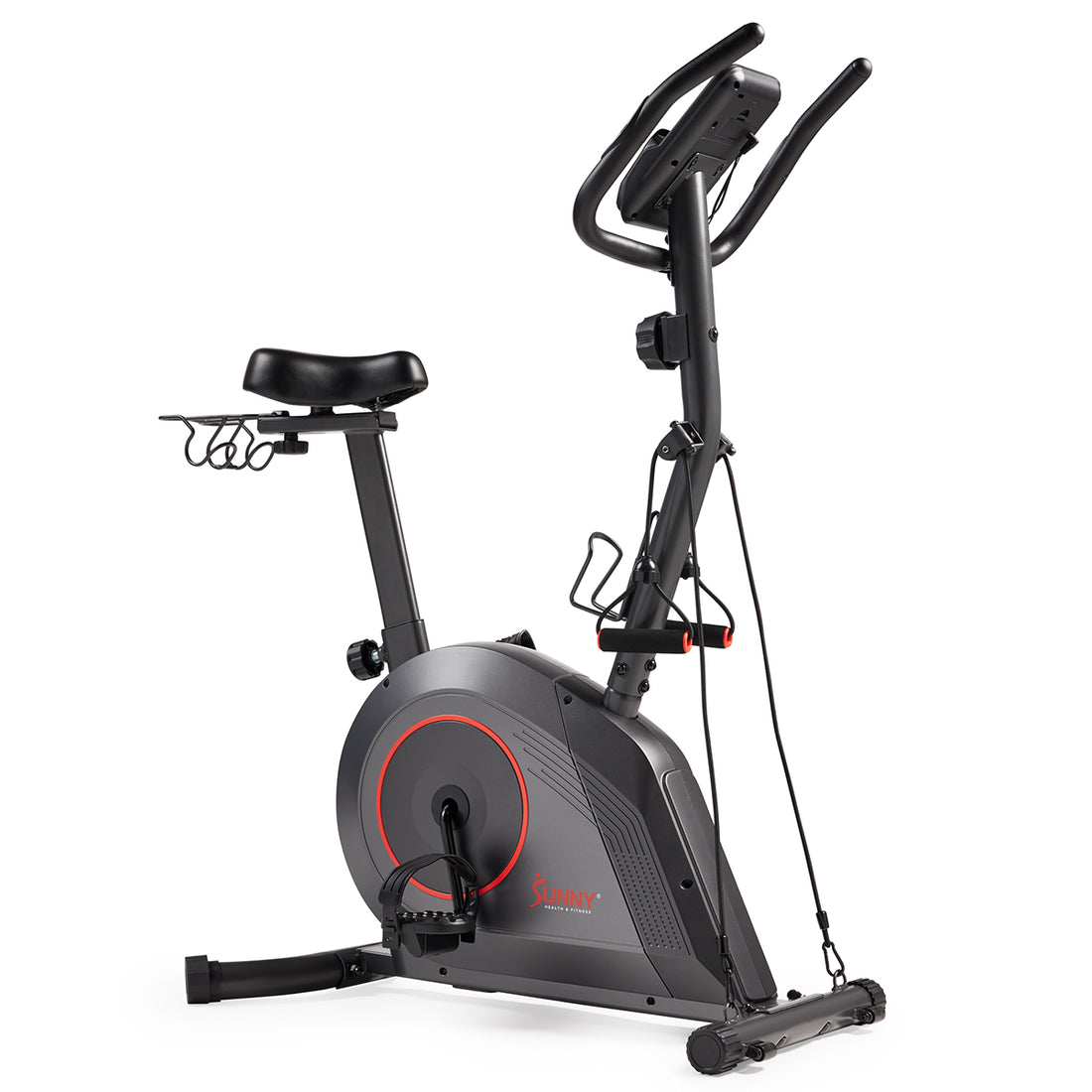
1. Upright Exercise Bikes: Features and Benefits
Upright exercise bikes are among the most recognizable types of stationary bikes. Their design resembles a traditional outdoor bicycle, with the pedals positioned directly beneath the rider and handlebars extending forward. Unlike indoor cycling bikes, which typically encourage a more aggressive, forward-leaning position, upright bikes generally promote a comfortable, relatively vertical posture.
Key Features of Upright Bikes
Most upright exercise bikes include an adjustable seat, handlebars, multiple resistance levels, and a digital monitor for tracking workout information. Depending on the model, additional features may include heart rate monitoring, preset workout programs, and app connectivity.
Their relatively compact frames also make them appealing for home gyms where floor space is limited.
For example, the Sunny Health & Fitness 16-Level Magnetic Resistance Upright Bike (SF-B224004) offers adjustable magnetic resistance, allowing riders to customize workout intensity as their fitness levels change. Magnetic resistance is particularly useful for home workouts because it provides a smooth, controlled riding experience without relying on direct friction against the flywheel.
Benefits of Upright Exercise Bikes
Upright bikes work well for steady-state cardio, warmups, endurance training, and moderate-intensity sessions. Riders can adjust resistance and pedaling speed to accommodate different fitness levels. Compared with many recumbent models, upright bikes typically require less floor space, making them practical for apartments, spare rooms, and smaller home gyms. The traditional cycling posture makes upright bikes relatively intuitive for people who already enjoy riding outdoor bicycles. Cycling provides cardiovascular exercise without the repetitive foot-strike impact associated with running.
Who Should Choose an Upright Bike?
An upright bike is a good choice for beginners, casual cyclists, and anyone looking for a versatile home cardio machine. It's particularly appealing to people who want a straightforward exercise bike without the specialized positioning of a recumbent or indoor cycling model. If you want something that supports regular cardio sessions while taking up relatively little space, an upright bike is an excellent starting point.
2. Recumbent Exercise Bikes: Comfort and Low-Impact Exercise
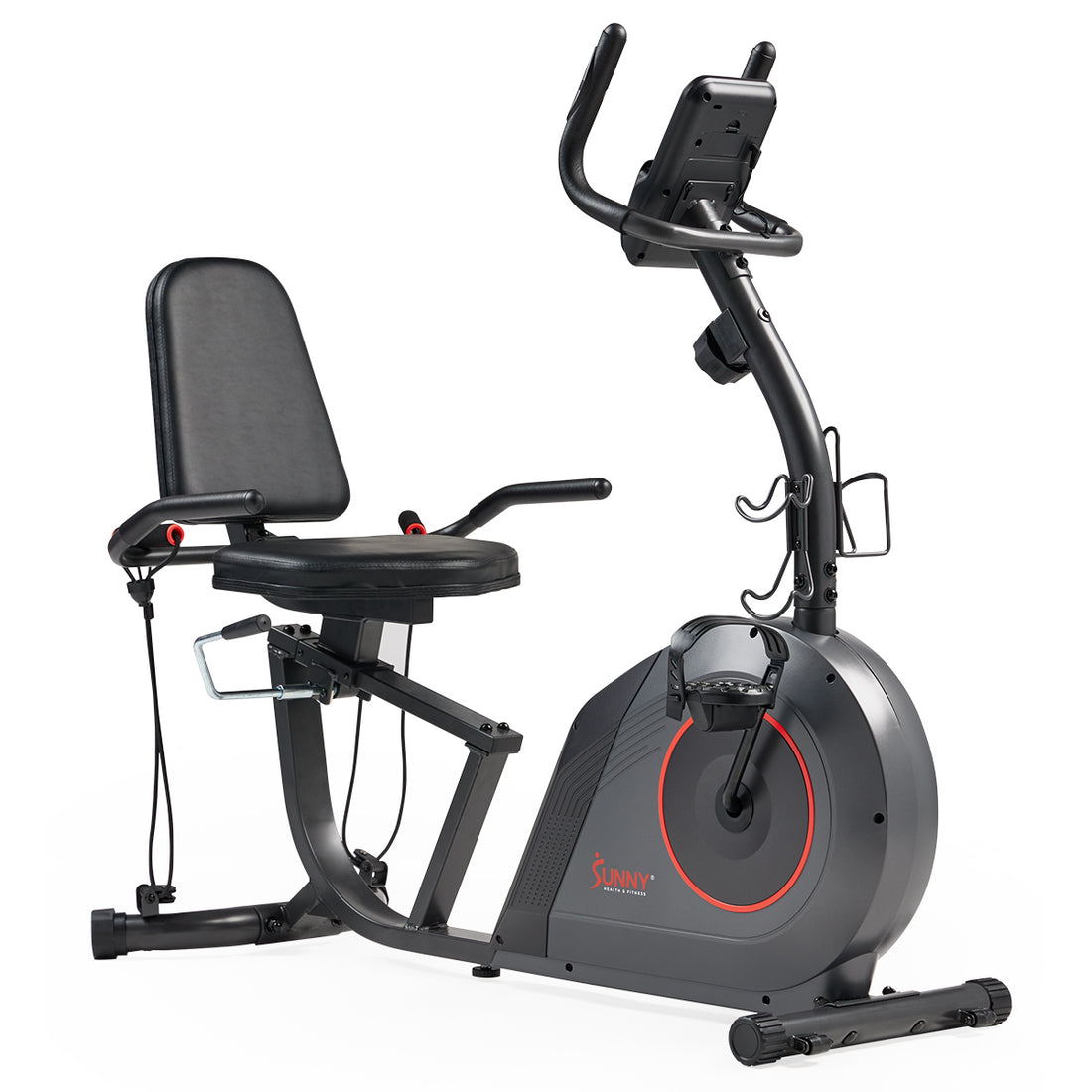
If comfort is your top priority, a recumbent exercise bike may be the better choice. These bikes feature a wider, chair-like seat with a backrest and pedals positioned in front of the rider rather than directly underneath. This reclined position provides additional support for the back and distributes body weight across a larger seating surface. Recumbent bikes are particularly popular among older adults, beginners, and people who prefer a more supported exercise experience.
Key Features of Recumbent Bikes
Recumbent bikes typically feature:
- Wide, cushioned seats with supportive backrests.
- Adjustable seating positions to accommodate different leg lengths.
- Forward-positioned pedals for a reclined riding posture.
- Multiple resistance settings for customizable workouts.
- Digital monitors for tracking time, distance, speed, and other metrics.
Some models also include magnetic resistance and smart connectivity for a more personalized workout experience.
Sunny Health & Fitness offers several recumbent options worth exploring:
Performance Smart Recumbent Bike (SF-RB420032): Designed for comfortable home cardio, this model combines a supportive recumbent configuration with smart features.
16-Level Smart Magnetic Resistance Recumbent Bike (SF-RB424006): With 16 resistance levels, this model gives users more control over workout intensity while maintaining the comfort-focused design of a traditional recumbent bike.
Benefits of Recumbent Exercise Bikes
The reclined seating position and backrest provide support throughout the workout, making recumbent bikes appealing to people who find traditional bike saddles uncomfortable. Cycling is a low-impact form of cardiovascular exercise. Recumbent bikes allow users to maintain a steady pedaling motion without the impact associated with running or jumping. The lower seating position and wider seat can make getting on and off the bike easier for some individuals, particularly those with balance or mobility concerns. Recumbent bikes are well suited to longer, moderate-intensity workouts. Their comfortable design can make it easier to maintain a consistent exercise routine.
Stationary cycling can also be beneficial for people managing joint discomfort. The Arthritis Foundation notes that stationary biking can help improve mobility, strengthen supporting muscles, and reduce pain in people with knee osteoarthritis [1].
Who Should Choose a Recumbent Bike?
Recumbent bikes are ideal for people who prioritize comfort, back support, and accessible cardiovascular exercise. They're worth considering for older adults, beginners, people with balance concerns, and anyone who prefers a more relaxed riding position.
However, a recumbent bike isn't necessarily limited to light workouts. Adjustable resistance allows users to increase their effort and challenge their cardiovascular fitness over time.
If comfort is what will help you stay consistent, a recumbent bike may be the best exercise bike for your home gym.
3. Indoor Cycling Bikes: Performance and Intensity
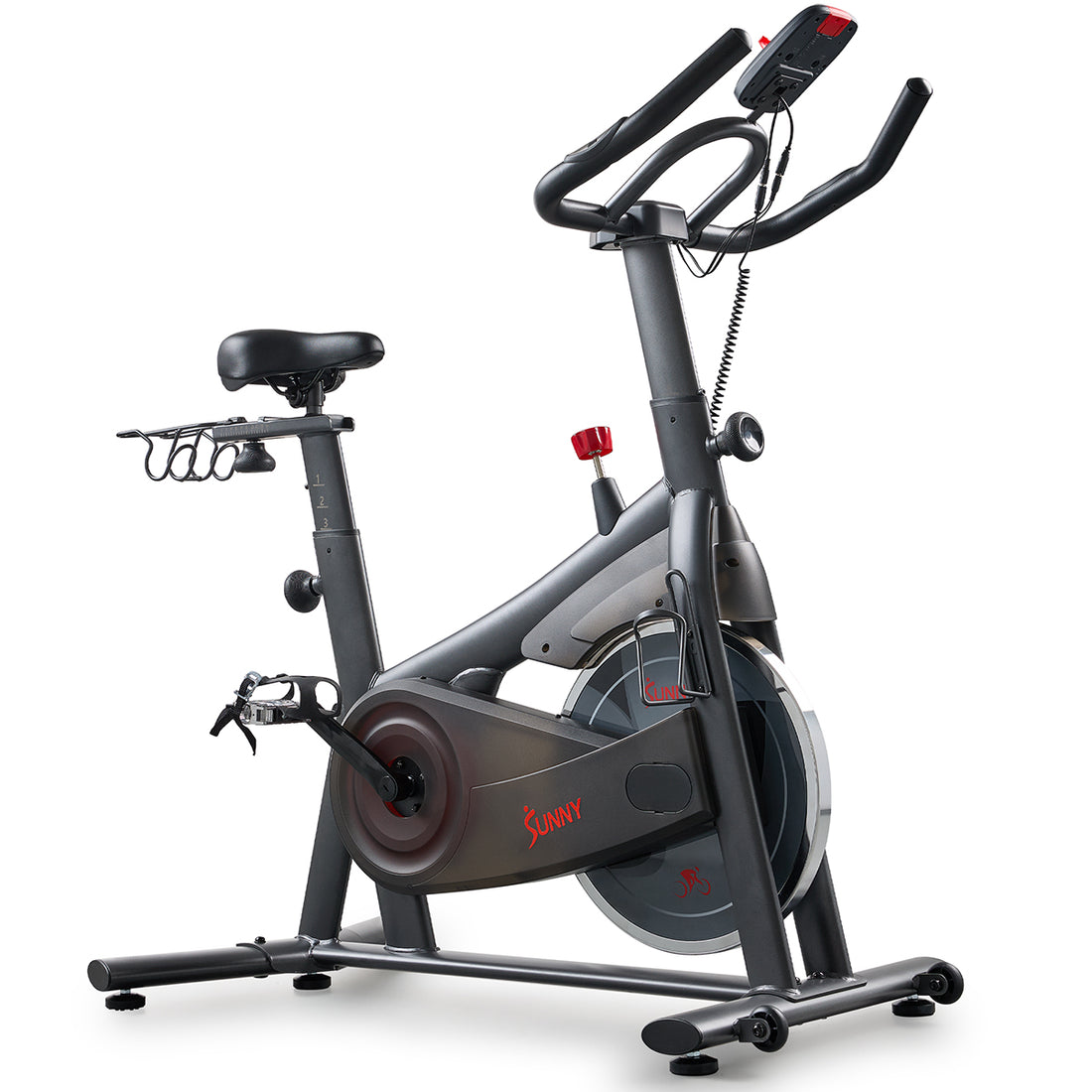
For people who enjoy challenging workouts, indoor cycling bikes offer a more performance-oriented experience. Sometimes called spin bikes, these machines are designed to replicate the feel of riding a road bicycle. They typically feature a forward-leaning riding position, narrower seat, lower handlebars, and a weighted flywheel.
Unlike traditional upright bikes, indoor cycling bikes are designed to accommodate standing climbs, fast-paced intervals, and changes in resistance throughout a workout.
Key Features of Indoor Cycling Bikes
Indoor cycling bikes commonly include:
- Adjustable handlebars and seats for customized positioning.
- Weighted flywheels for smooth pedaling momentum.
- Adjustable resistance for changing workout intensity.
- Sturdy frames designed to accommodate more demanding sessions.
- Digital monitors or smart connectivity for tracking performance.
Many models also support cycling apps and guided workout programs, allowing users to follow structured training sessions at home.
Sunny Health & Fitness offers two great options worth considering:
Active 200 Smart Magnetic Cycling Exercise Bike (SF-B124067): This indoor cycling bike combines magnetic resistance with smart functionality, making it a practical option for riders who want a more engaging home cycling experience.
Premium Heavy-Duty Indoor Smart Magnetic Cycling Exercise Bike (SF-B124069): Designed for a more performance-focused workout, this model combines a heavy-duty construction with magnetic resistance and smart features.
Benefits of Indoor Cycling Bikes
Indoor cycling bikes are particularly well suited to interval training, sprints, and challenging resistance workouts. Unlike most traditional upright bikes, indoor cycling bikes allow riders to stand out of the saddle, adding variety to their workouts. Their road-bike-inspired positioning makes them appealing to outdoor cyclists who want to maintain endurance and cycling fitness indoors. Indoor cycling bikes with Bluetooth connectivity can connect with fitness apps like SunnyFit, allowing users to track progress and incorporate guided workouts into their routines.
Who Should Choose an Indoor Cycling Bike?
Indoor cycling bikes are best for people who enjoy challenging cardio sessions, want to improve cycling endurance, or prefer the energy of studio-style cycling classes. They're also a good fit for experienced cyclists who want to continue training regardless of weather conditions.
If your goal is to incorporate more intense workouts into your home fitness routine, an indoor cycling bike is worth considering.
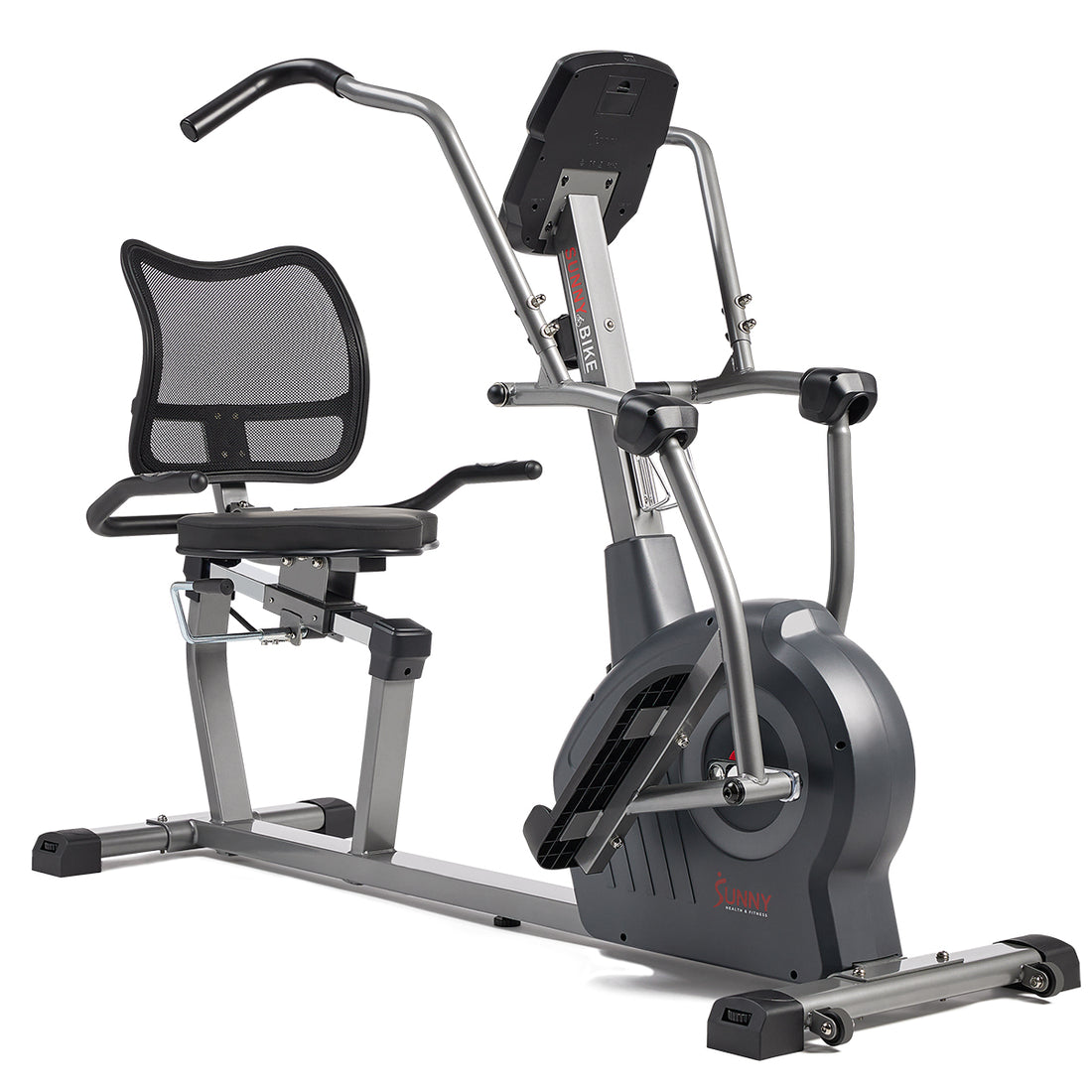
4. Recumbent Ellipticals: A Full-Body Cardio Alternative
Not every home workout needs to involve traditional cycling. Recumbent ellipticals offer an alternative for people who want the comfort of a recumbent bike combined with the movement patterns of an elliptical trainer.
These machines generally feature a supportive seat, reclined positioning, and elliptical-style pedals that move through a continuous, guided path.
Depending on the model, moving handlebars can also incorporate upper-body movement, creating a more comprehensive cardio workout than a conventional recumbent bike.
Key Features of Recumbent Ellipticals
Recumbent ellipticals combine several design elements:
- Reclined seating with back support.
- Elliptical-style pedal movement.
- Adjustable resistance levels.
- Optional moving handlebars for upper-body engagement.
- Digital displays and smart workout features on select models.
Sunny Health & Fitness offers two great options in this category:
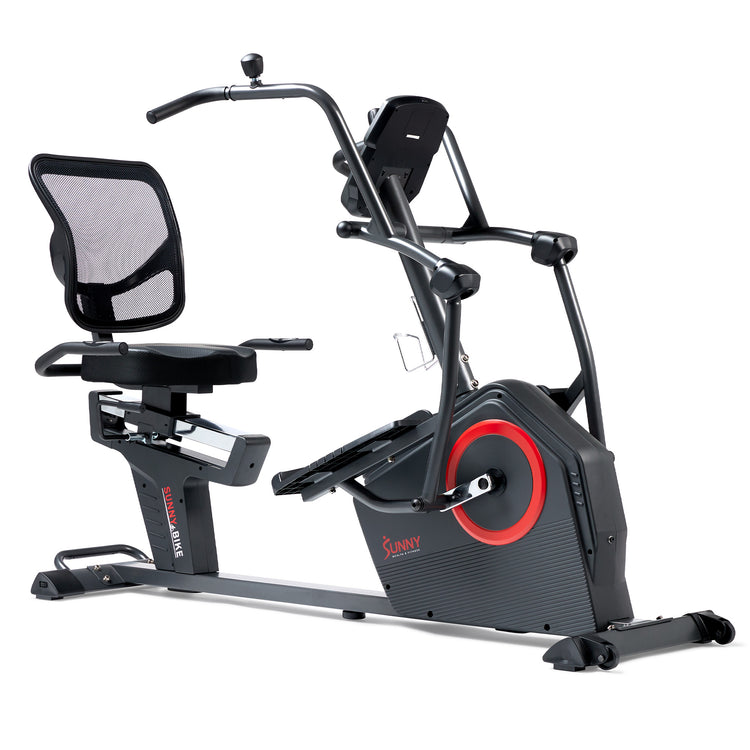
Premium Smart Programmable Electro-Magnetic Resistance Recumbent Elliptical Cross Trainer (SF-RBE4886SMART): This model combines a recumbent elliptical design with programmable electromagnetic resistance, offering users multiple ways to customize their workouts.
Performance Elite Magnetic Recumbent Elliptical Cross Trainer (SF-RBE420049): This option combines a supportive seating configuration with magnetic resistance for comfortable, low-impact cardio.
Benefits of Recumbent Ellipticals
Models with moving handlebars allow users to incorporate arm movement alongside lower-body exercise. The guided elliptical motion eliminates the repetitive foot strikes associated with walking and running. The supportive seat and backrest help create a more comfortable workout environment. The elliptical movement provides an alternative to traditional cycling, which can be appealing for people who want to change up their cardio routine.
Who Should Choose a Recumbent Elliptical?
A recumbent elliptical is a good option for people who want a comfortable, low-impact cardio machine with the potential for greater upper-body involvement. It's especially appealing to users who enjoy elliptical workouts but prefer the additional support of a seated position.
5. Mini Exercise Bikes: Compact and Convenient
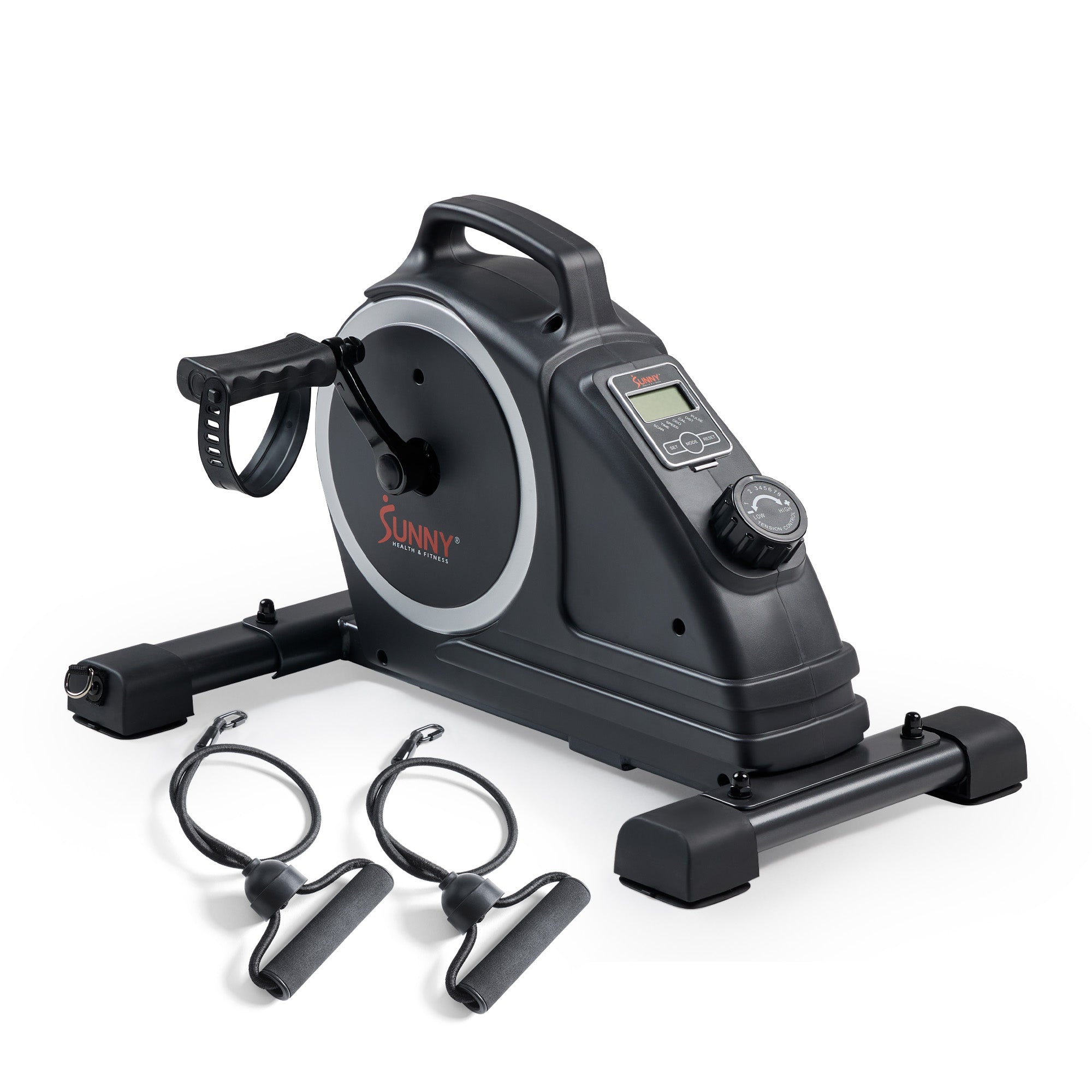
For people who don't have room for a full-sized exercise bike, mini exercise bikes offer a convenient alternative. These compact pedal machines typically feature a small frame with two pedals and adjustable resistance. They can be placed in front of a chair or underneath a desk, allowing users to pedal while working, reading, or watching television. Some models can also be placed on a tabletop for upper-body arm-pedaling exercises.
Key Features of Mini Exercise Bikes
Mini exercise bikes generally offer:
- Compact, portable designs.
- Adjustable resistance settings.
- Simple digital displays.
- Easy storage when not in use.
- Seated pedal operation.
The Sunny Health & Fitness Premium Smart Magnetic Mini Exercise Bike (SF-B020026SMART) is an option for people looking for a compact workout solution with magnetic resistance and smart features.
Benefits of Mini Exercise Bikes
Minibikes are considerably smaller than traditional stationary bikes and can fit into home offices, living rooms, and other multipurpose spaces. Pedaling while seated provides an opportunity to incorporate more movement throughout the day. Their portable design makes them easy to move between rooms or store when they're not being used. Minibikes provide a simple way to incorporate light physical activity without committing to a full workout session.
Who Should Choose a Mini Exercise Bike?
Mini exercise bikes are ideal for people with limited space, busy schedules, or a preference for shorter, lower-intensity movement sessions. They're also useful for people who want to stay active while working at a desk.
Keep in mind that minibikes generally aren't designed to replace a full-sized exercise bike for challenging cardio workouts. They're best viewed as a convenient supplement to an existing fitness routine.
Upright vs. Recumbent vs. Indoor Cycling Bikes: Which Is Best?
Now that we've explored the different types of exercise bikes, how do you decide which one is right for you? The answer largely depends on your fitness goals, preferred riding position, and desired workout intensity.
Here's a quick comparison:
| Feature | Upright Bike | Recumbent Bike |
Indoor Cycling Bike |
| Riding position | Upright | Reclined | Forward-leaning |
| Seat design | Traditional bike seat | Wide seat with backrest | Narrow cycling seat |
| Workout intensity | Low to moderate, adjustable | Low to moderate, adjustable | Moderate to high |
| Back support | Minimal | Full backrest | Minimal |
| Standing workouts | Model dependent | No | Yes |
| Best for | Everyday cardio | Comfort and accessibility | Intense cycling workouts |
| Space requirements | Generally compact | Often larger | Generally compact |
All three bike styles can provide effective cardiovascular exercise. The biggest differences involve positioning, comfort, and the types of workouts each machine is designed to support.
For general fitness and everyday cardio, an upright bike offers versatility. For added comfort and back support, a recumbent bike is a strong option. For high-intensity training and cycling performance, an indoor cycling bike is likely the better fit.
What to Consider Before Buying an Exercise Bike
Beyond choosing the right bike style, there are several features worth comparing before making a purchase.
1. Resistance Type
Resistance determines how challenging your workout feels. Magnetic resistance uses magnets to create adjustable tension without direct contact with the flywheel. It generally provides smooth, quiet operation and requires relatively little maintenance.
Friction resistance uses a brake pad that presses against the flywheel to increase resistance. It offers a traditional cycling feel but may require occasional replacement of the friction pad.
Electromagnetic resistance uses electronically controlled magnets, often allowing for more precise adjustments and programmable workout settings.
Consider how much control you want over workout intensity and whether quieter operation is important for your home environment.
2. Adjustability and Comfort
A bike should accommodate your body comfortably. Look for adjustable seats and handlebars, particularly if multiple people will use the machine. Proper positioning is important for maintaining good form and avoiding unnecessary strain. When seated, your knee should retain a slight bend when the pedal reaches its lowest position.
Seat comfort also matters. A wide, supportive seat may be preferable for longer workouts, while experienced cyclists may prefer a narrower saddle.
3. Workout Tracking and Smart Features
Digital monitors can help you track important workout information, including time, speed, distance, resistance, and estimated calories burned. Some exercise bikes also offer smart connectivity, allowing users to access guided workouts, track progress, and explore additional training features through compatible fitness apps.
Think about whether these features will genuinely improve your workout experience or whether a simpler bike will meet your needs.

4. Size and Storage
Before purchasing, measure your available workout area and compare it with the bike's assembled dimensions. Remember to account for additional clearance around the machine so you can comfortably mount, dismount, and exercise.
If you're working with limited space, a compact upright bike or mini exercise bike may be more practical than a larger recumbent model.
5. Your Fitness Goals
Finally, think about what you want to accomplish. Are you primarily interested in improving cardiovascular endurance? Do you want a comfortable way to stay active throughout the day? Are you training for outdoor cycling or looking for challenging interval workouts?
Choosing a bike that aligns with your goals makes it easier to establish a consistent routine and get more value from your investment.
Finding the Best Exercise Bike for Your Home
The best exercise bike is ultimately the one that fits your lifestyle, supports your fitness goals, and makes you want to keep moving.
Upright bikes offer a versatile solution for everyday cardio, recumbent bikes prioritize comfort and supported movement, and indoor cycling bikes provide an engaging option for more demanding workouts. Recumbent ellipticals and mini exercise bikes offer additional flexibility for people who want alternative movement patterns or space-saving designs.
With options ranging from traditional upright bikes to performance-focused indoor cycling machines, Sunny Health & Fitness offers a variety of ways to bring convenient cardio exercise into your home. Explore the different models, compare their features, and find the exercise bike that helps you make fitness a consistent part of your routine.




Add Your Name & Email
Please enter your name and email to continue.We won’t display your email publicly.