




Claire Jenkins
Fitness Trainer
ACSM-CEP, MS, RYT-200
If you spend hours sitting at a desk, lift heavy weights, carry kids, commute, or simply deal with the stress that modern life places on your body, your spine probably feels it. Tight hips, aching lower backs, stiff shoulders, and compressed posture have become incredibly common, even among active people.
That’s where decompression benches come in.
Spinal decompression benches and stretching tables are becoming increasingly popular because they offer a gentle, controlled way to help relieve tension, support mobility, and encourage better posture without requiring aggressive inversion or complicated recovery routines. Unlike traditional inversion tables that suspend users upside down, newer decompression systems prioritize comfort, accessibility, and adjustable stretching.
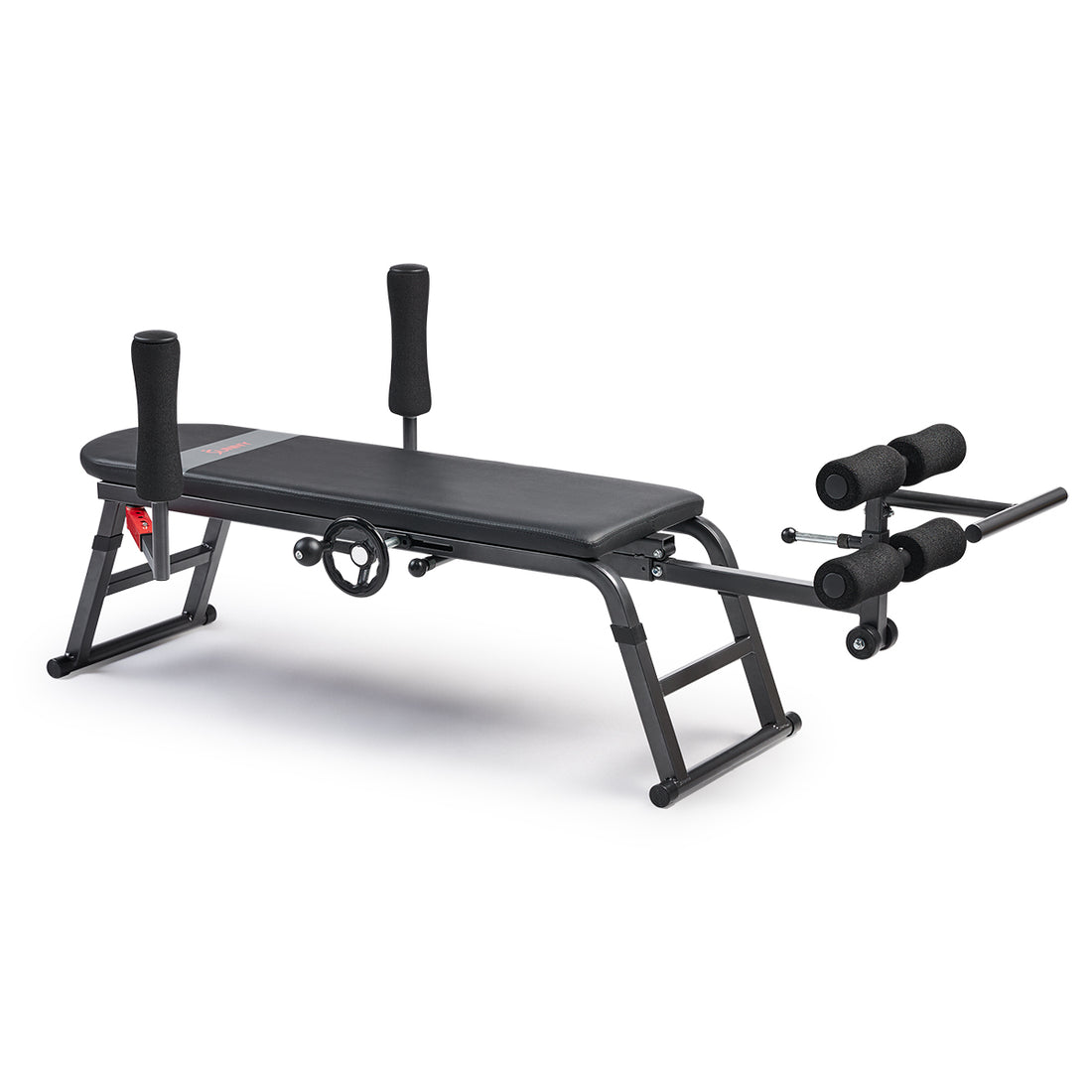
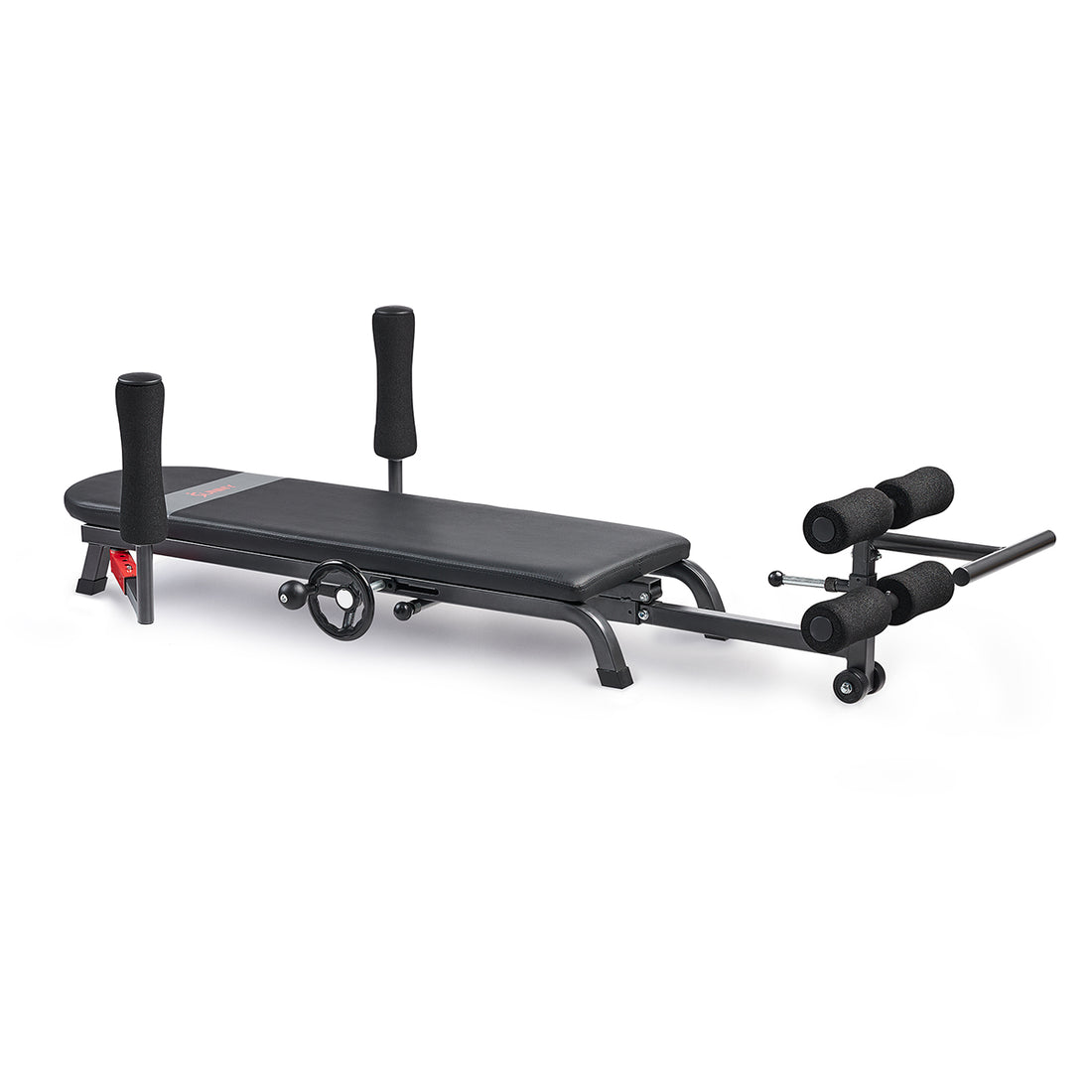
Two standout examples are the Sunny Health & Fitness Inversion Traction & Stretch Decompression Table SF-BH623052 and the Sunny Health & Fitness Adjustable Stretch and Decompression Table SF-BH624089, both designed to provide controlled lumbar stretching and decompression from the comfort of home. These models emphasize adjustability, comfort, and safer stable decompression mechanics compared to traditional inversion systems.
In this article, we’ll explore:
• What spinal decompression is
• The science-backed benefits of decompression stretching
• How decompression benches work
• The differences between flat decompression tables and traditional inversion tables
• How to safely use a decompression bench at home
• Who may benefit most from these tools
Let’s dive in.
What Is Spinal Decompression?
Spinal decompression refers to techniques that gently reduce pressure on the spine and surrounding structures, including the vertebral discs, nerves, muscles, and connective tissues.
Throughout the day, gravity compresses the spine. Sitting for prolonged periods, repetitive lifting, poor posture, and high-impact exercise can all increase spinal loading. Over time, this may contribute to stiffness, discomfort, reduced mobility, and muscular tension.
Decompression techniques aim to temporarily create more space within the spine by applying controlled traction or stretching forces. This can help with a number of issues, including:
- Reducing feelings of tightness and pressure
- Improving flexibility and mobility
- Encouraging relaxation of surrounding muscles
- Supporting healthy posture and spinal alignment
- Promoting circulation to spinal tissues
Research suggests that spinal traction and decompression may help reduce lower back discomfort and improve mobility in some individuals, especially when combined with exercise and movement-based therapy.[1][2]
While decompression benches are not medical devices intended to diagnose or treat disease, many users incorporate them into wellness, recovery, flexibility, and mobility routines.
Why Does the Spine Get Compressed?
The human body is designed to move, but modern life often encourages the opposite.
Hours spent sitting can place sustained pressure on the lumbar spine and hip flexors. In fact, some studies suggest seated postures may increase disc pressure more than standing.[3]
Common habits such as desk work, driving, poor posture, and sedentary routines can all contribute to spinal compression. Even athletes might experience spinal compression after training sessions that involve squats, deadlifts, running, or jumping.
This is why mobility work and recovery strategies are increasingly emphasized in fitness and physical therapy settings.
What Are the Benefits of a Decompression Bench?
While it’s difficult to escape spinal compressing activities, spinal decompression tools can help. Here are 5 ways a decompression bench can provide relief:
1. Gentle Lumbar Stretching
One of the primary goals of decompression benches is to gently stretch the lumbar spine. The lower back absorbs substantial force during daily movement and exercise. Tight muscles surrounding the lumbar region can create discomfort and limit mobility.
The Sunny Health & Fitness Adjustable Stretch and Decompression Table SF-BH624089 is specifically designed for controlled lumbar stretching without requiring full inversion. Adjustable arm supports and customizable positioning allow users to gradually increase stretching intensity based on comfort level. Gentle traction may help reduce feelings of stiffness while promoting an improved range of motion.
2. Improved Flexibility and Mobility
Mobility is more than flexibility alone; it’s about moving efficiently and comfortably. Decompression stretching can help lengthen tight tissues surrounding the spine, hips, and posterior chain. Many users report feeling “looser” after sessions due to reduced muscular guarding and improved tissue extensibility.
Research on spinal traction and stretching interventions has shown improvements in flexibility and movement function in some populations.[4]
Mobility-focused recovery work may also complement:
- Strength training
- Running
- Yoga
- Cycling
- Functional fitness
- Postural correction programs
3. Posture Support
Poor posture often develops gradually through repetitive positioning and muscular imbalance. Rounded shoulders, forward head posture, and excessive spinal flexion are common among desk workers and smartphone users. Decompression benches encourage elongated spinal positioning and may help users become more aware of neutral posture alignment.
The Sunny Health & Fitness Inversion Traction & Stretch Decompression Table SF-BH623052 is designed to support posture improvement through controlled decompression and stretching mechanics. When combined with strengthening exercises for the core, glutes, and upper back, decompression work may support healthier movement patterns over time.
4. Relaxation and Stress Relief
Physical tension and mental stress are deeply connected. Muscles tend to tighten during periods of emotional stress, particularly in the neck, shoulders, and lower back. Stretch-based decompression sessions may encourage parasympathetic nervous system activation—the “rest and recover” state associated with relaxation.[5]
Many users enjoy incorporating decompression stretching into evening recovery routines because it provides:
- A calming environment
- Gentle movement
- Reduced muscular tension
- Improved body awareness
The supportive foam padding featured on both Sunny Health & Fitness decompression models is designed to enhance comfort during longer stretching sessions, which can help you slide into peak relaxation.
5. A More Comfortable Alternative to Full Inversion
Traditional inversion tables require users to hang partially or fully upside down. While some people enjoy inversion therapy, others find it uncomfortable or intimidating.
Full inversion can also increase pressure within the eyes and cardiovascular system, making it unsuitable for certain individuals.[6]
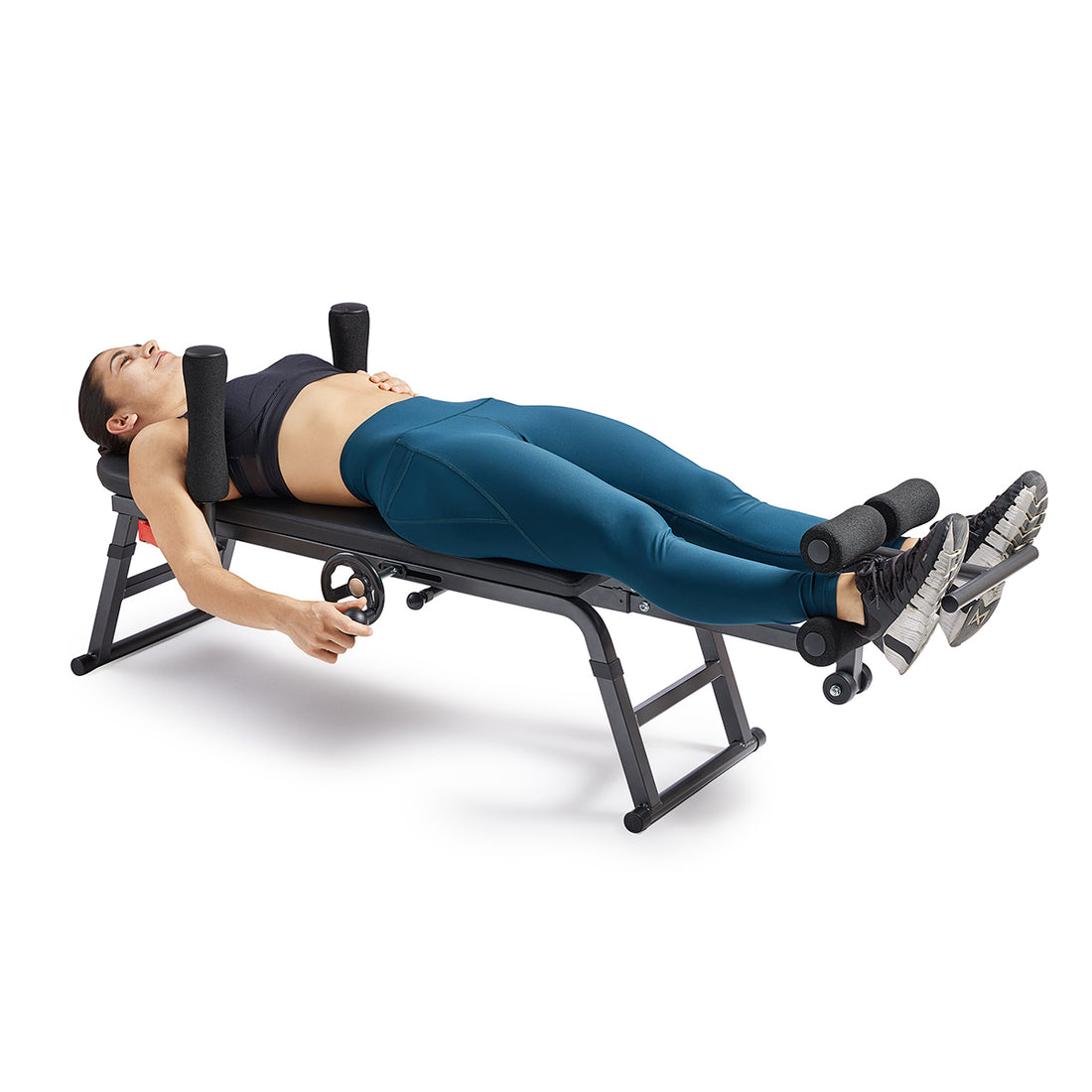
The flat decompression table approach offers a gentler experience. The Sunny Health & Fitness Adjustable Stretch and Decompression Table SF-BH624089 specifically emphasizes decompression “without inversion,” allowing users to remain in a supported horizontal position during stretching. This makes decompression training more accessible for users who dislike hanging upside down, are new to recovery training, prefer gradual stretch control, or want a more relaxing experience.
What is the Difference Between Flat Decompression Tables vs Traditional Inversion Tables?
Although both devices aim to reduce spinal compression and promote stretching, they work very differently.
Traditional Inversion Tables
Traditional inversion tables use gravity by rotating the user upside down or partially inverted.
Pros
- Strong traction force
- Deep stretching sensation
- Adjustable inversion angles
Cons
- Can feel intimidating
- Requires ankle support
- Increased pressure on eyes and blood pressure
- Less comfortable for some users
- Not ideal for people sensitive to inversion
Inversion therapy may not be recommended for people with glaucoma, hypertension, heart disease, or certain vascular conditions.[6]
Flat Decompression Tables
Flat decompression tables keep the body supported horizontally while applying controlled stretching and traction.
The Sunny Health & Fitness Adjustable Stretch and Decompression Table SF-BH624089 and Sunny Health & Fitness Inversion Traction & Stretch Decompression Table SF-BH623052 both prioritize controlled decompression rather than aggressive upside-down inversion.
Benefits of Flat Decompression Tables
- More approachable for beginners
- Reduced pressure compared to full inversion
- Easier entry and exit
- Comfortable padded support
- Adjustable positioning
- Better for relaxation-focused stretching
Many users find flat decompression tables easier to use consistently because the experience feels calmer and more controlled. Consistency matters. Recovery tools only work if people actually enjoy using them.
| Feature | Decompression Bench | Inversion Table |
| Body Position | Supported, horizontal or semi-supported | Partially or fully inverted |
| Comfort Level | More approachable for beginners | May feel intense or intimidating |
| Pressure Concerns | Typically less intense than full inversion | May increase eye or blood pressure concerns |
| Best For | Gentle stretching and recovery | Users who prefer stronger inversion traction |
How to Use a Decompression Bench Safely
Using a decompression bench should feel gentle and controlled, not painful. Here’s a simple beginner-friendly approach.
Step 1: Adjust the Bench
Both Sunny Health & Fitness decompression models are designed with adjustable features to accommodate various body sizes and flexibility levels.
Before starting:
- Adjust the length settings
- Position arm supports comfortably
- Ensure stable footing and alignment
Step 2: Start with Short Sessions
Begin with 5-10 minute sessions on a light stretch intensity. Remember to use a relaxed breath to allow your body to sink deeper into the stretch. There is no need to force deep traction immediately. Your body adapts best to gradual progression.
Step 3: Focus on Relaxation
Avoid tensing your muscles. Instead, breath slowly, relax your shoulders, and let your hips soften. Allow the stretch to gradually deepen. Many people unknowingly resist stretching by bracing. Relaxation improves effectiveness.
Step 4: Progress Gradually
As comfort improves, you can increase the duration of use, adjust the intensity, and incorporate additional mobility exercises afterward.
Who May Benefit from a Decompression Bench?
A decompression bench can be helpful for anyone, but those who might gain particular benefit include:
- Desk workers
- Strength athletes
- Runners
- Cyclists
- Older adults focused on mobility
- Individuals seeking gentle recovery tools
- People with general feelings of back tightness
The Sunny Health & Fitness Adjustable Stretch and Decompression Table SF-BH624089 supports users up to 400 pounds and accommodates heights up to 6’10”, making it accessible to a broad range of users.
When to Talk to a Healthcare Professional
Although decompression benches can support general wellness and recovery routines, they are not appropriate for everyone. Consult a healthcare provider before using decompression equipment if you have any of the following:
- Severe osteoporosis
- Spinal instability
- Recent surgery
- Uncontrolled hypertension
- Glaucoma
- Hernias
- Acute disc injuries
- Neurological symptoms
Pain, numbness, tingling, or worsening symptoms should always be evaluated professionally.
Building a Simple Recovery Routine
A decompression bench works best as part of a broader movement and recovery strategy.
Here’s an example:
Daily Recovery Flow
- 5–10 minutes decompression stretching
- Cat-cow mobility drills
- Hip flexor stretching
- Glute activation exercises
- Walking or light cardio
This combination addresses both mobility and muscular support.
Remember: passive stretching alone is rarely enough. Strong, mobile muscles help maintain healthy posture and movement.
Why Consistency Matters More Than Intensity
One of the biggest misconceptions about recovery tools is that “more is better.” In reality, consistency produces better long-term outcomes than aggressive stretching sessions.
A gentle 10-minute decompression session several times per week is often more beneficial than forcing occasional intense stretches.
The approachable design of the Sunny Health & Fitness Inversion Traction & Stretch Decompression Table SF-BH623052 and the Sunny Health & Fitness Adjustable Stretch and Decompression Table SF-BH624089 may help users build sustainable recovery habits because the experience is adjustable, comfortable, and beginner-friendly.
Final Thoughts
Modern bodies experience a tremendous amount of compression from sitting, stress, repetitive movement, and daily life. Recovery tools that encourage gentle mobility and relaxation can play an important role in supporting overall wellness.
Unlike traditional inversion tables that rely on aggressive upside-down positioning, newer decompression benches provide a more controlled, comfortable experience focused on gradual stretching and support. The Sunny Health & Fitness Adjustable Stretch and Decompression Table SF-BH624089 offers decompression without full inversion, while the Sunny Health & Fitness Inversion Traction & Stretch Decompression Table SF-BH623052 provides adjustable traction and stretching support designed to promote flexibility, posture, and recovery.
Whether you’re an athlete recovering from training, a desk worker battling stiffness, or simply someone looking for a more restorative wellness routine, decompression stretching may help you move and feel better. The key is consistency, comfort, and listening to your body.


Add Your Name & Email
Please enter your name and email to continue.We won’t display your email publicly.