




Nahima Shaffer
Fitness Trainer
FMS, NASM-CNC, NASM-CPT
What began as a rehabilitation method has quickly evolved into one of today’s most popular forms of exercise. Built around precise, controlled movements, Pilates strengthens the body while improving posture, balance, flexibility, and overall body awareness, making it a versatile practice for people of all fitness levels.
If you're wondering how to do Pilates, a reformer is one of the best tools to get started. Unlike mat Pilates, which relies primarily on body weight, a reformer uses adjustable resistance, a gliding carriage, straps, and a footbar to support hundreds of exercises that build strength, control, and coordination through low-impact movement. This adaptable equipment makes Pilates accessible for beginners while still providing a challenge for experienced practitioners.
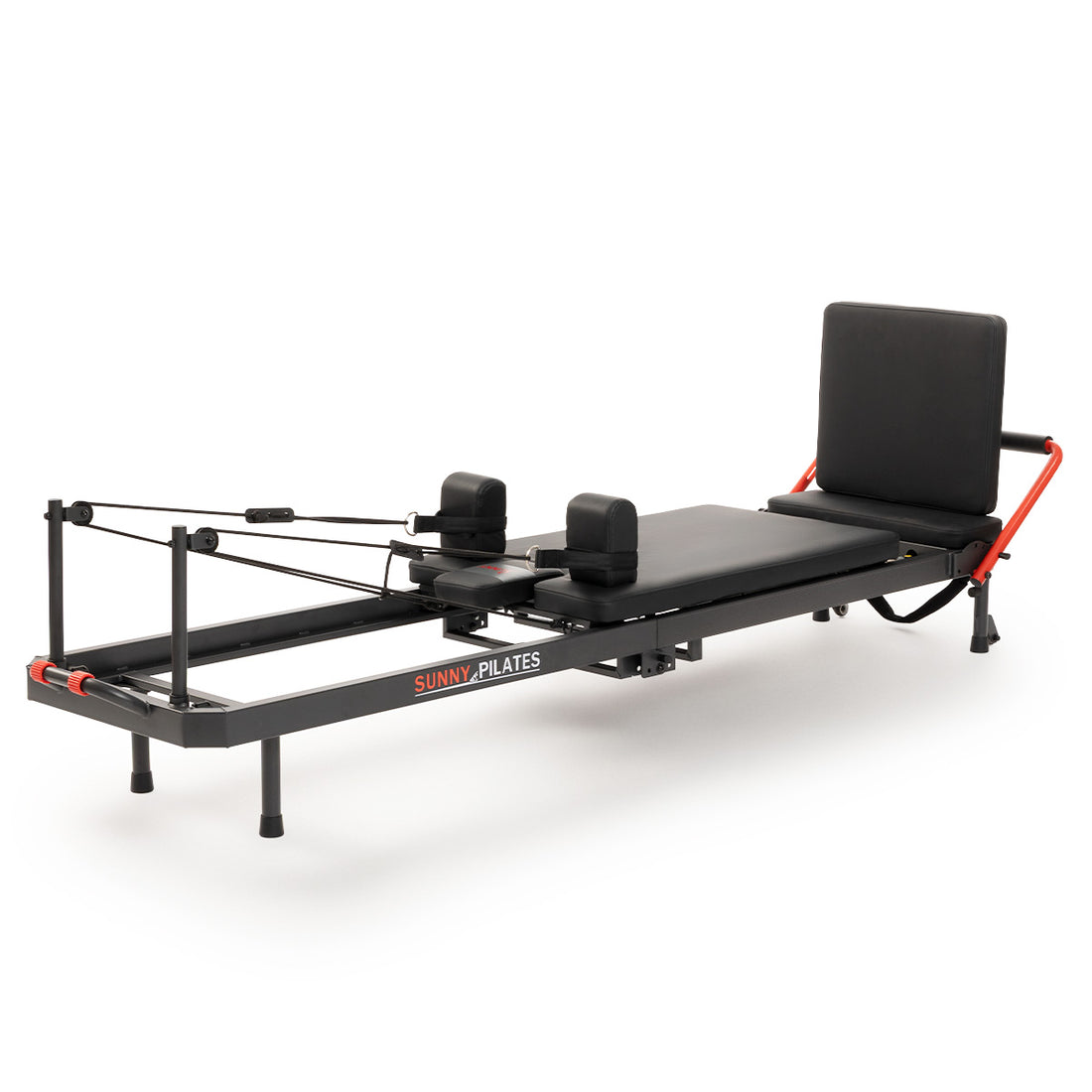
In this guide, you'll learn how a Pilates reformer works, its benefits, safety tips, and beginner-friendly exercises. You'll also discover how Sunny Health & Fitness’ Foldable Reformer makes it easy to enjoy an effective Pilates workout from home.
What Is a Pilates Reformer?
A Pilates reformer is an adaptable piece of fitness equipment that enhances traditional Pilates movements through adjustable resistance. Its sliding carriage, spring resistance, straps, and footbar work together to provide support, challenge, and variety across a wide range of exercises and progression levels.
The adjustable springs allow you to increase or decrease resistance based on your fitness level and the movement you're performing, making the reformer suitable for beginners and experienced users alike. Every exercise is performed with either slow or controlled movements that engage your core while helping improve strength, balance, flexibility, and coordination.
One of the biggest advantages of a reformer is its versatility. You can perform exercises lying down, sitting, kneeling, standing, or even side-lying, allowing you to target muscles throughout your entire body while maintaining proper alignment and control. The ability to adjust resistance over time also supports progressive overload, a key principle of strength training that helps you continue to build strength and improve performance.
Benefits of Reformer Pilates
Whether your goal is to build strength, improve mobility, or simply move with greater confidence, a Pilates reformer offers benefits that extend beyond the workout itself.
Builds Full-Body Strength
A reformer workout engages multiple muscle groups at once, helping strengthen your arms, shoulders, back, core, glutes, and legs through coordinated and controlled, low-impact movement.
Improves Core Stability and Posture
Nearly every Pilates exercise emphasizes core engagement. Over time, this can help improve posture, support spinal alignment, and build the stability needed for everyday activities.
Increases Flexibility and Mobility
The reformer's smooth, guided movements encourage a greater range of motion while strengthening muscles through that range, helping improve both flexibility and joint mobility.
Low-Impact and Joint-Friendly
Because the carriage and spring resistance reduce impact on your joints, reformer Pilates is an excellent option for people looking for an effective workout that's gentle on the body.
Supports Every Fitness Level
From beginners learning proper movement patterns to experienced exercisers looking for more resistance and advanced or corrective exercises, a reformer can grow with you. Adjustable spring settings and multiple exercise variations make it easy to progress at your own pace.
How to Use a Pilates Reformer Safely
Starting a Pilates reformer workout may seem intimidating at first, but the machine is designed to support controlled, guided movement. The key to getting the most from your reformer is focusing on proper alignment, slow movements, and gradually increasing intensity as you build strength and confidence.
Before beginning, take time to adjust the reformer to fit your body and fitness level. Start by selecting an appropriate spring resistance, adjusting the footbar and head pad positions (if applicable), and setting the straps to a comfortable length. Proper setup helps you maintain good form and allows you to perform exercises safely and effectively.
When learning how to do Pilates on a reformer, focus on quality over quantity. Pilates is built around deliberate movements, steady breathing, and engaging your core throughout each exercise. Avoid rushing through repetitions or using momentum—instead, concentrate on smooth carriage movement and maintaining proper posture.
Beginners should start with lighter resistance and foundational movements before progressing to more challenging exercises. As your balance, coordination, and strength improve, you can gradually increase resistance and explore new movements.
Sunny Health & Fitness’ Foldable Reformer is a great option to support this progression with adjustable features, including multiple spring resistance options, customizable footbar and head pad positions, and varied accessories that allow users to build confidence and expand their workouts over time.
Beginner Reformer Pilates Exercises & Poses
Once you understand the basics of how a reformer works, the best way to build confidence is by practicing foundational movements. Beginner reformer Pilates exercises focus on developing core control, improving alignment, and learning how to move with resistance. These exercises create a solid foundation for progressing to more advanced Pilates movements.
1. Footwork
Footwork is one of the most common beginner reformer exercises and a great way to learn proper form and carriage control. Lying on your back with your feet placed on the footbar, you'll press the carriage away while keeping your core engaged and your spine stable.
This movement helps strengthen the legs, glutes, and core while teaching you how to coordinate your breath with controlled movement.

2. The Hundred
The Hundred is a classic Pilates exercise designed to challenge core endurance and breath control. On a reformer, it is typically performed lying on the carriage with the straps in your hands while your arms move in small, quick pumps.
This exercise helps activate the abdominals, improve circulation, and build body awareness.

3. Arm Circles
Arm Circles use the reformer's straps and spring resistance to strengthen the shoulders, arms, upper back, and core. While lying or sitting in a supported position, you'll guide your arms through controlled circular movements while maintaining proper posture.
This exercise is a great introduction to upper-body reformer training and helps improve shoulder mobility.
4. Seated Biceps Curls
Using the reformer straps, Seated Biceps Curls combine upper-body strength training with Pilates principles like posture and core engagement. Sitting tall on the reformer box, you’ll curl against the resistance while keeping your spine tall and returning your arms slowly.
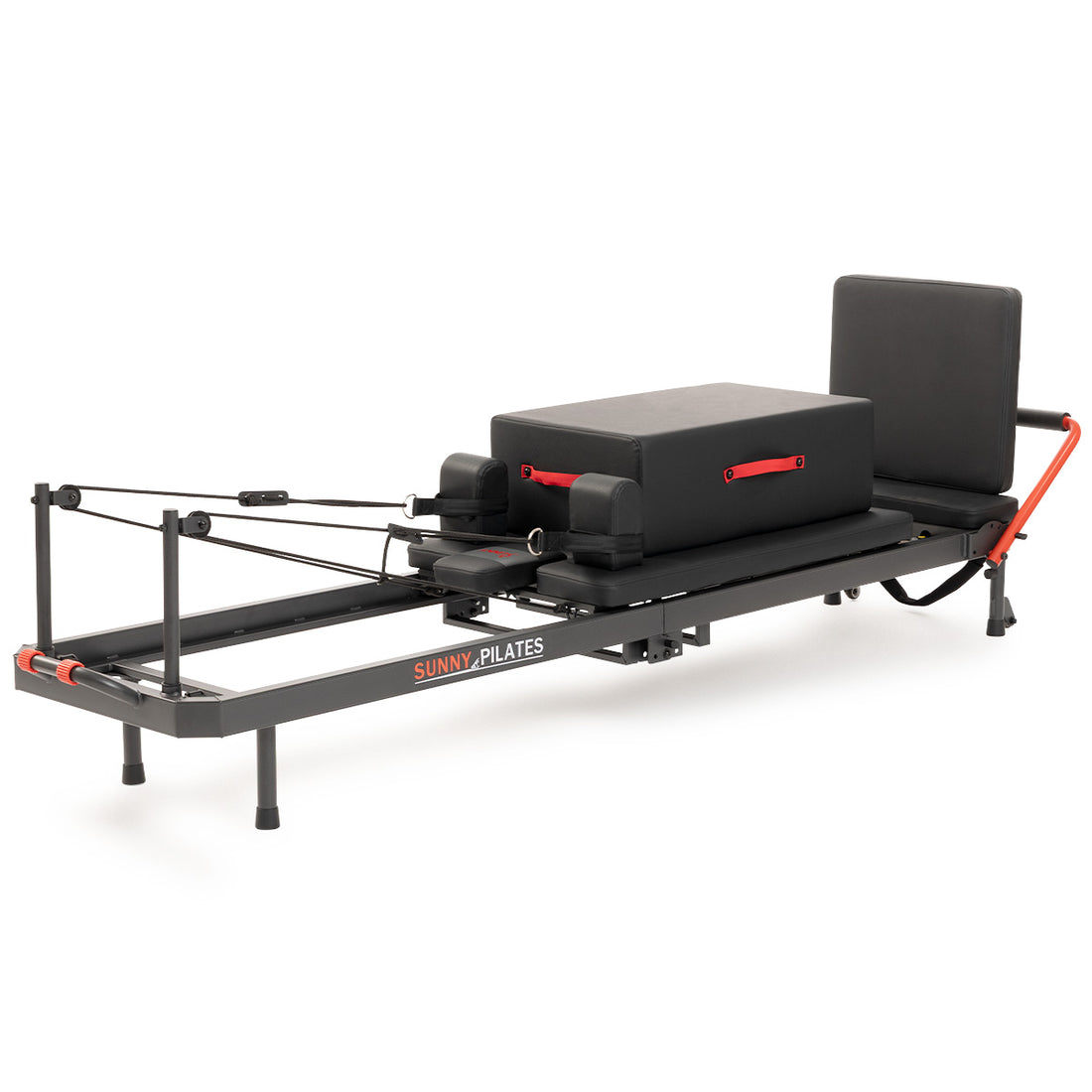
On Sunny’s SF-PM20, the included reformer box expands exercise options by supporting seated, elevated, and assisted movements.

5. Swan Prep
Swan Prep is a beginner-friendly movement that focuses on back strength, spinal mobility, and posture. Using the reformer box, you can perform this exercise from an elevated position while practicing controlled spinal extension.
This movement and its progression options help strengthen the muscles along the back while encouraging better body awareness.

6. Carriage Lunge
Popular in contemporary classes, the Carriage Lunge is a beginner-friendly lower-body exercise that improves leg strength, balance, and stability. With one foot on the platform and the other on the moving carriage, you'll slowly glide the carriage back and forth while keeping your hips level, core engaged, and posture upright.
This exercise strengthens the quadriceps, hamstrings, glutes, and hip stabilizers while improving coordination and single-leg control. It also helps develop balance and lower-body alignment, making it an excellent progression from basic footwork exercises.
If you’re just starting out, you can utilize a light hold of the straps for security and stability.

7. Pilates Jumps
For those looking to add more dynamic movement, Pilates Jumps use the jump board to create low-impact cardio-style training. By pressing away from the jump board while maintaining control, you can engage the legs, glutes, and core while developing coordination and endurance.
Unlike traditional jumping exercises, the reformer provides a more supported environment with reduced impact on the joints.
As you become more comfortable with these foundational movements, you can explore additional exercises by adjusting spring resistance, changing body positions, and incorporating accessories like straps and the reformer box. A consistent Pilates reformer workout is all about building control, strength, and confidence one movement at a time.

You’re Ready to Get Started!
Learning how to do Pilates on a reformer is about more than mastering individual exercises, it's about building strength, improving mobility, and developing better body awareness through controlled, intentional movement. Whether you're looking to improve posture, increase core stability, or enjoy a low-impact full-body workout, a reformer offers a versatile way to support your fitness goals.
The Sunny Health & Fitness Foldable Reformer is an option designed to make that journey accessible at home with its adjustable spring resistance and customizable features to support comfortable, safe, and effective Pilates workouts as you progress.
By starting with foundational poses and focusing on proper form, you'll build the skills needed to enjoy the many long-term benefits that reformer Pilates has to offer.


Add Your Name & Email
Please enter your name and email to continue.We won’t display your email publicly.