




Claire Jenkins
Fitness Trainer
ACSM-CEP, MS, RYT-200
Getting a rowing machine for your home offers a low-impact, full-body cardio and strength workout right from the comfort of your living room. But not all rowers are created equal! As you explore different models, you’ll see a variety of resistance systems and design philosophies: magnetic, water, air, hydraulic, and hybrid (“Row-N-Ride” style).
Choosing the right one depends on your space, noise tolerance, workout goals, budget, and preferences for feel. In this guide, we will walk you through the pros and cons of each type, key decision factors, and real-world examples to help you land on the rower best suited for you.
Why Rowing Machines Are Worth Considering

Before diving into the types of rowers, let’s review why a rower is a solid home gym investment.
Rowing is one of the most efficient full-body workouts available, engaging the legs, core, back, arms, and shoulders in every stroke. Unlike high-impact exercises such as running, rowing is gentle on the joints, making it an excellent option for people of all fitness levels or those recovering from injury. It offers a powerful combination of cardiovascular conditioning and strength training, helping you build muscular endurance while simultaneously keeping your heart rate elevated.
Many of Sunny’s rowing machines are also designed with home use in mind, featuring compact, foldable frames or vertical storage capabilities. Plus, rowing is highly adaptable – whether you’re looking for a light recovery session or an intense interval workout, you can scale the intensity to match your goals.
That said, not every rower will feel or behave the same. The “resistance mechanism” (how it creates drag or resistance) is the heart of that difference. Let’s break down the main categories.
Magnetic Rowers

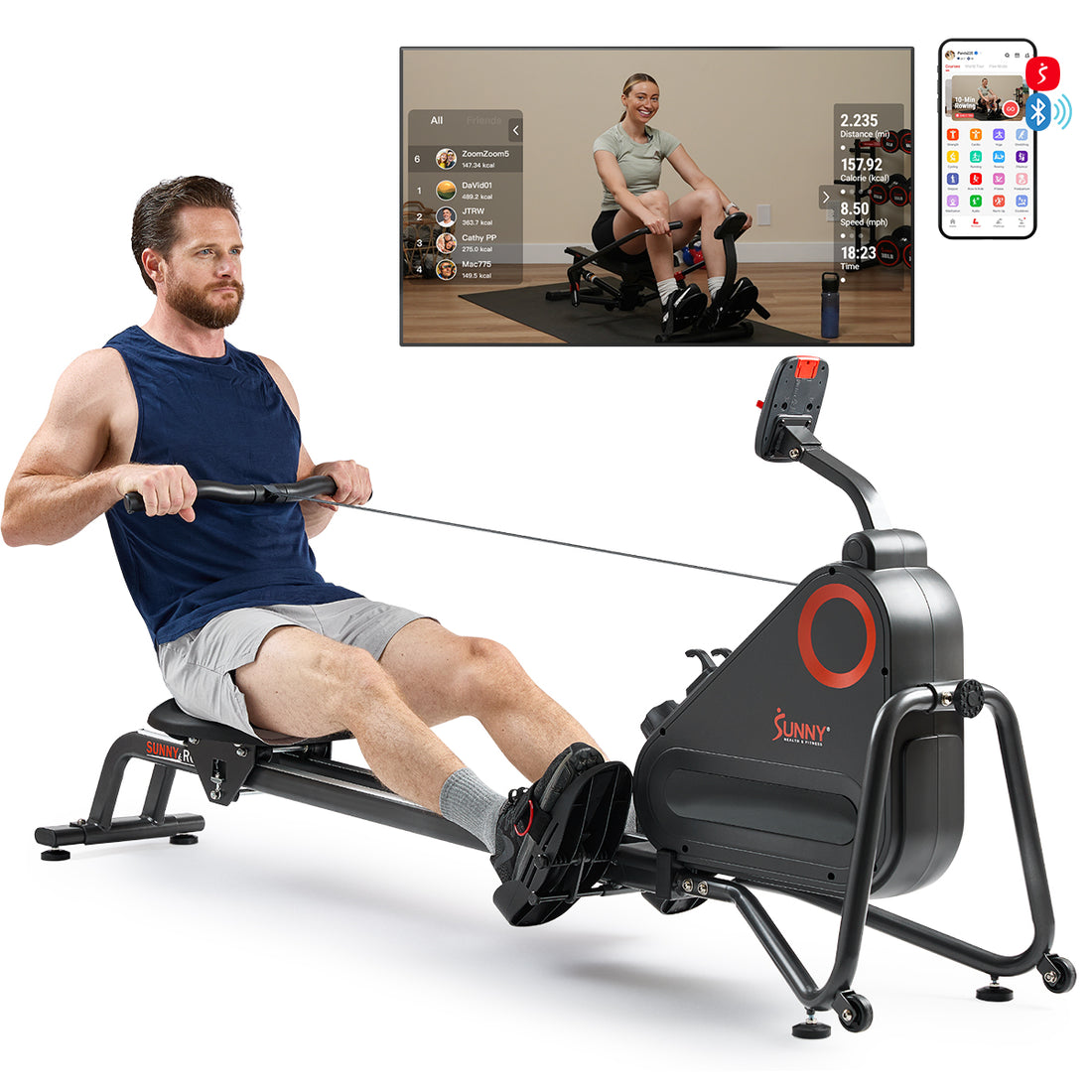
A magnetic rowing machine uses magnets that move closer to or away from a metal flywheel, creating resistance by magnetic drag. You often adjust “levels” via a lever or console. No physical contact (no friction) results in quiet operation.
Feel and experience
Because the magnetic force is applied independently of your stroke speed, the resistance feels “locked in” or consistent across strokes (so long as your speed stays in range). The downside is that it doesn’t react dynamically in the same way that air or water does when you put in more effort.
Strengths
- Extremely quiet: ideal for homes or apartments.
- Low maintenance (no chains, belts, or fluids to change).
- Resistance adjustable via console (easy for quick changes).
- Often foldable or compact.
Considerations
- Lacks the “natural rowing inertia” feel for purists.
- Resistance must be preset going into the workout, or you may have to stop mid workout to change resistance levels.
- Magnet strength may fade over time.
Example
One of our great magnetic rowers in the Sunny Health & Fitness lineup is the Premium Smart Ultra Quiet Dual Slide Rail Magnetic Rowing Machine. It features a long 50" rail, whisper-quiet dual rail system, 16 levels of magnetic resistance, and connected fitness features. This is a good benchmark: quiet, sturdy, app-friendly.
Water Rowers

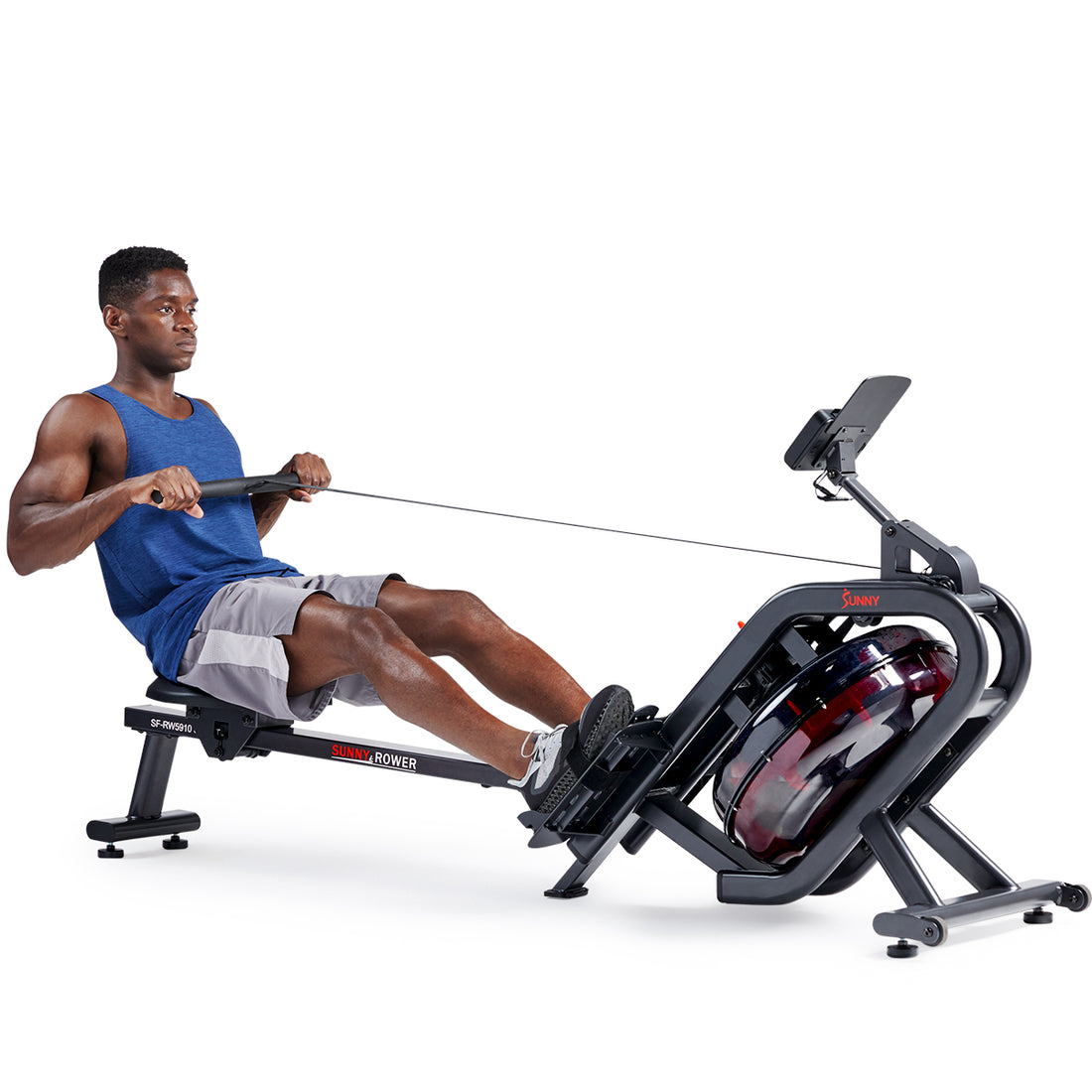
Water rowers use a sealed tank filled with water and paddles inside. As you pull, the paddles push through the water, creating drag. Resistance scales with how hard you pull (more effort = more resistance). Some models let you adjust water level to preset “base resistance.”
Feel and experience
Arguably the closest feel to real rowing on water: smooth, responsive, and immersive. The soft swoosh sound is often considered part of the experience. Because resistance scales naturally, beginners won’t feel overwhelmed, and advanced users can push hard.
Strengths
- Very natural, dynamic stroke feel.
- Resistance is “self-adjusting” – a harder stroke means more load.
- Visceral experience (the fluid sound is motivating and soothing).
- Robustly built with premium components (wood, steel, acrylic tanks).
Considerations
- Tank adds weight; harder to move or reposition.
- Needs occasional maintenance (cleaning tank, avoiding algae).
- Noisy to some (the water movement is loud although most find it pleasant).
- Takes up a little more space.
Example
A prime example of a water rower is the Phantom Hydro Premium SMART Water Rowing Machine. It has a large water tank that offers dynamic resistance, a supportive, sturdy structure, and app connectivity to help keep workouts interesting.
Air Rowers

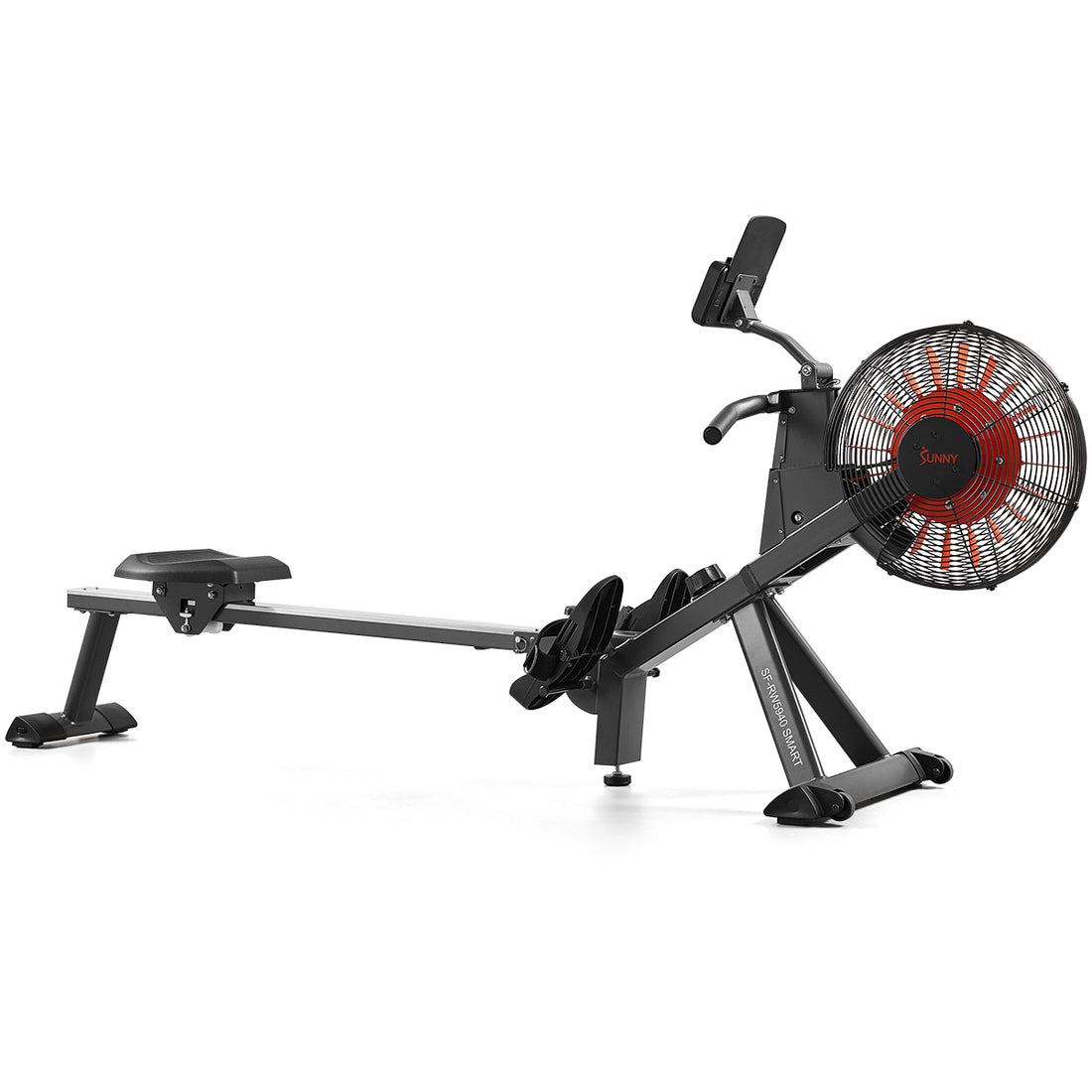
Air rowers use a fan or flywheel that spins in the open air; the faster you pull, the more resistance the airflow generates (similar to water rowers).
Feel and experience
The air rower feels very dynamic. Your own effort directly controls resistance. If you sprint, the machine fights back harder. Many rowers and coaches prefer this style for training. The characteristic “woosh” sound of the fan is part of the feedback.
Strengths
- Responsive: the harder you push, the harder it pushes back.
- Simple design (fewer electronics).
- Wide resistance range: capable of very hard efforts.
- Enduring: many gym rowers are air-based for durability.
Considerations
- Loud: the fan noise is inherent (not ideal for apartments).
- Resistance declines at slow stroke rates. Warm-up or recovery strokes feel airy.
- Less ideal if you want whisper-quiet operation.
Example
Sunny’s Premium Smart Magnetic Air Rower is a hybrid model that combines magnetic and fan (“air blade”) resistance. It uses a dual-resistance system with 16 levels of magnetic resistance plus an air-blade mechanism to supplement. This gives users a hybrid feel that is the best of both worlds. It’s magnetic consistency that meets dynamic air feedback.
Hydraulic Rowers

Hydraulic rowers use pistons or cylinders (often under the seat, or under the arms) filled with fluid (air or oil) to simulate resistance. Some have adjustable pistons or tension knobs.
Feel and experience
The feel is less fluid and inertial than water or air so the stroke may feel damped or truncated. It can feel more “mechanical,” especially at extreme efforts.
Strengths
- Very compact. They can often fold or are small units.
- Lower cost: Often among the more affordable rower options.
- Good entry-level or secondary option (e.g., for apartments or offices).
Considerations
- Less smooth stroke feels so it may not support long sessions well.
- Piston wear over time.
- Not ideal for heavy users or intense interval training.
Example
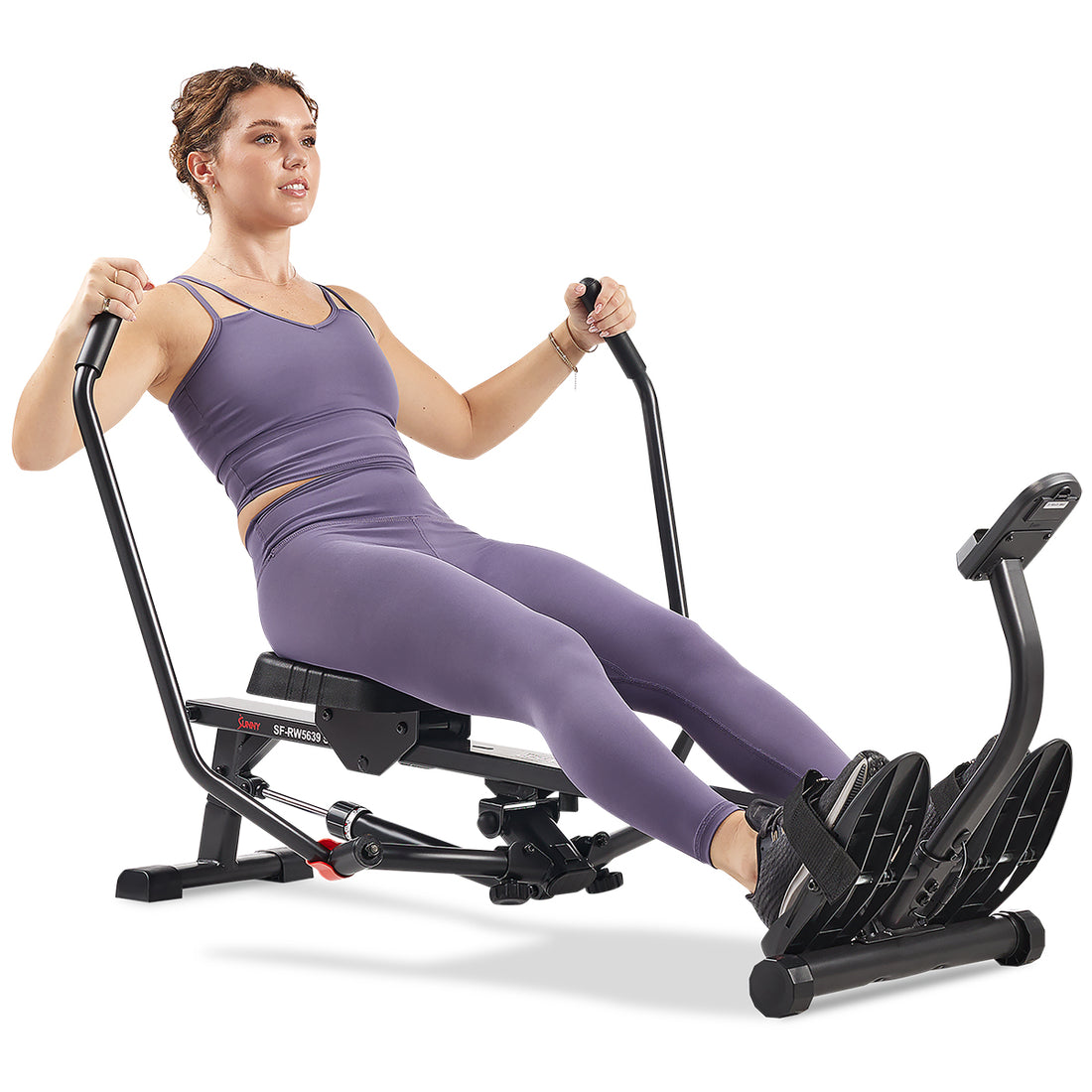
Sunny Health & Fitness offers a Smart Compact Full Motion Rowing. It boasts 12 levels of resistance and is a compact, full-motion rower. The split handles mimic the sensation of rowing with double oars and creates more strength building opportunities for the musculature of the shoulders and back.
Row-N-Ride / Hybrid / Multi-Motion Rowers

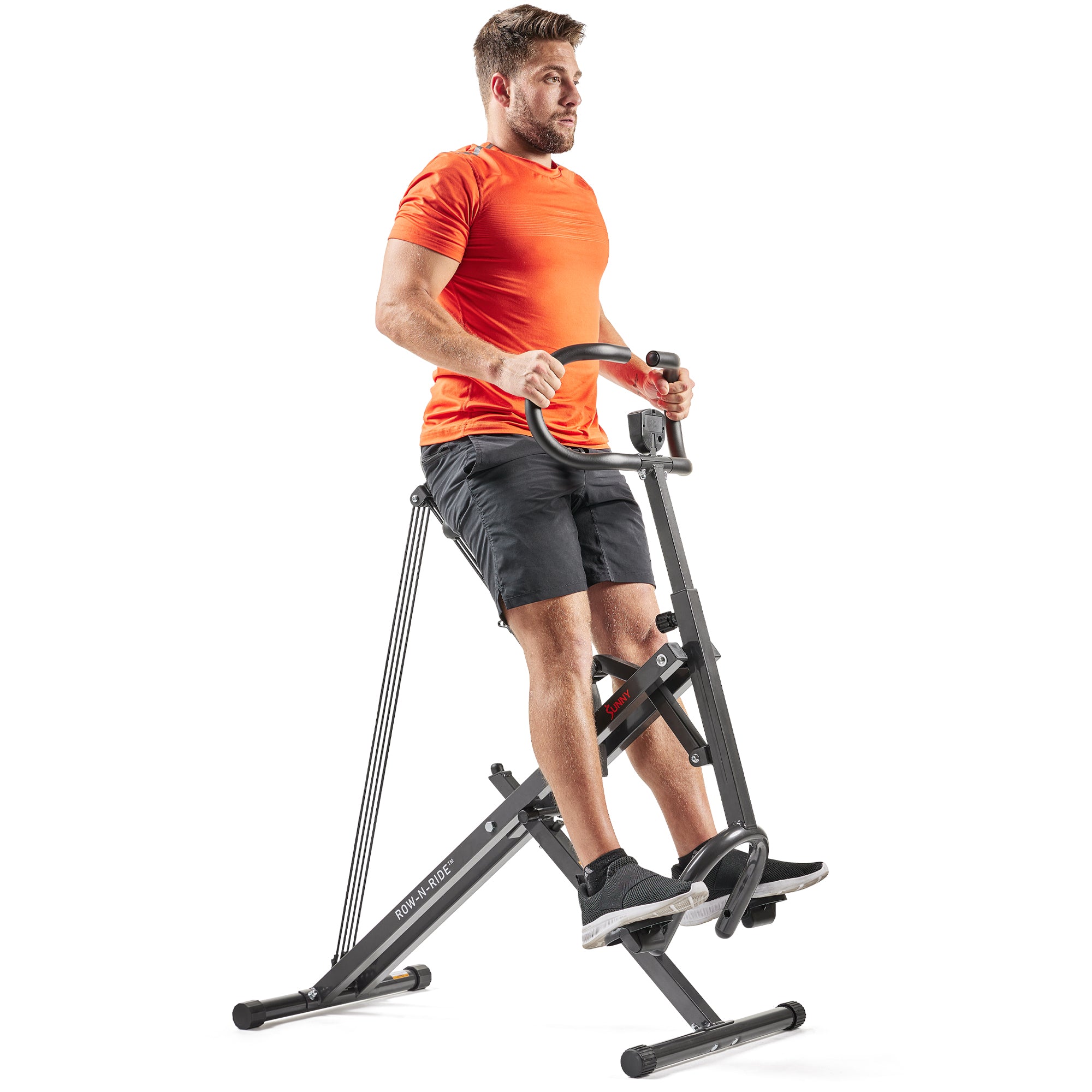
The “Row-N-Ride” style machines combine traditional sliding rowing with a squatting motion. Essentially, you get a hybrid machine that lets you row and perform vertical or lateral motions, targeting different muscle groups.
Feel and experience
You’re not just rowing, you are also in an upright squatting motion, so you’ll be working your legs and glutes in a different way than a traditional rower. It’s more of a hybrid fitness machine than a pure rowing ergometer. The rowing motion may feel secondary to versatility.
Strengths
- Multi-functionality: you can mix rowing, glute/squat work and core moves all in one machine.
- Unique and engaging variety keeps you from getting bored.
- Compact and foldable.
Considerations
- Not likely to match the pure rowing feel and robustness of dedicated rowers.
- May sacrifice some structural strength or durability for versatility.
- Less common, fewer choices.
Example
Sunny’s Upright Row-N-Ride® Plus Squat Assist Trainer offers a squat/glute and core emphasis, while also providing a sliding rowing motion. The four different resistance bands will give you numerous intensity options for your workout.
6 Factors to Consider When Purchasing a Rowing Machine

Now that you’re familiar with the different types of rowers out there, it’s time to decide which one best fits your needs. Below are the key factors to consider when evaluating different rowers and how each type stacks up in those areas.
1. Noise & Living Situation
If you live in an apartment, have housemates, or work out early in the morning, noise level is likely a top concern. Magnetic rowers are the quietest options, making them ideal for shared living spaces.
2. Feel & Immersion
For those who prioritize a realistic rowing experience, water rowers are generally considered the gold standard, offering fluid resistance that closely mimics rowing on water. Air rowers also provide dynamic, effort-based resistance that responds to your stroke power.
3. Footprint & Storage
Space is another crucial factor. Magnetic, hydraulic, and hybrid rowers often come in foldable or upright-storage designs, making them great for small homes or shared spaces. Water rowers, while elegant and stable, tend to be heavier and bulkier, especially because of their water tanks.
4. Durability & Maintenance
Magnetic rowers have the edge in maintenance as they use magnets to generate resistance, meaning no friction, wear, or fluid maintenance is involved. Water rowers, while durable, do require some upkeep. Keeping the tank clean, treating the water to prevent algae, and checking for leaks are all crucial for maintaining optimal function. Air rowers and hybrid models are generally low maintenance, though you’ll want to keep them clean and check moving parts periodically.
5. Performance & Resistance Range
If you’re aiming to improve endurance, power, or engage in high-intensity training, resistance range matters. Water and air rowers naturally scale resistance based on your effort. If you pull harder, you’ll get more resistance. Magnetic rowers rely on preset levels, which may cap your intensity if you outgrow the highest setting. Hydraulic rowers can struggle under high output or extended sessions, making them less ideal for interval or power training. Hybrid rowers, especially those combining magnetic and air resistance, offer a nice middle ground.
6. Fitness Goals
Your specific fitness goals will shape your best choice. If you're training for rowing performance or want a realistic, athletic feel, water and air rowers (or hybrid combinations) are your best bet. If you're looking for quiet, consistent cardio sessions in a small space, magnetic or hybrid machines make the most sense. If you’re after variety, such as incorporating glutes, squats, and core work into your sessions, a Row-N-Ride machine could be the most motivating option. And if you’re outfitting a compact home gym, a foldable magnetic or hydraulic rower may offer the best balance of function and footprint.
By weighing each of these factors, you can confidently choose the rowing machine that not only fits your space and budget but also keeps you engaged and progressing toward your goals.
Final Recommendations

If you want to start simple and quiet, a magnetic rower like the Smart Magnetic Rower is a solid choice. If you crave immersive feel, look at water or hybrid models like the Premium Smart Obsidian Surge 500 m Water Rowing Machine or Sunny’s magnetic-air hybrids. And if you want something versatile for mixed motion, the Upright Row-N-Ride adds variety beyond rowing.
Ultimately, the best rowing machine is simply the one you’ll use. Something that fits your space, motivates you, and grows with you. The ideal rower is the one you keep coming back to over time.


Add Your Name & Email
Please enter your name and email to continue.We won’t display your email publicly.