






Sydney Bueckert
Fitness Trainer
CES, FNS, GPTS, NASM-CPT
Raise your hand if you’ve been tempted to count the first few minutes of your run as a warm-up (slowly raises own hand). We get it: Why waste time warming up when you can start chipping away at your daily miles?
Warming up on the fly isn’t the worst idea. Starting your run with a jog and gradually increasing your clip elevates your core temperature, raises baseline VO2, and specifically mimics the movement in your workout— all common goals of a well-designed running warm-up.
Still, a dedicated warm-up routine primes your body for performance. This allows you to settle in at your desired pace at the outset of your run, making the most of every minute. A well-designed warm-up routine will also activate important muscle groups, increase mobility, and mentally prepare you for the workout ahead—boosting your efficiency and decreasing injury risk.
Here’s everything you need to know about how to warm up before a run.
Why You Should Warm Up Before Running
Regardless of how fast or far you plan to run, a warm-up will help you get more out of your workout. A 2025 review explains that a dynamic warm-up can improve joint range of motion, muscle flexibility, and force production; enhance central drive and muscle recruitment; increase body temperature, heart rate, circulation, and muscle oxygen saturation; and reduce perception of effort [1]. In short, a warm-up primes your mind and body for the workout ahead.
How to Warm Up Before a Run
A running warm-up should be light and dynamic, focused on prepping your body to run well, without zapping your energy.
For most runs, a simple 10-minute warm-up including a light jog and dynamic stretches will suffice. But the level of intensity a workout demands will dictate exactly what your warm-up should consist of. For example, a speed run may require a longer warm-up than an easy run (because it takes longer to build up to higher intensities). The goal is to progress seamlessly into your main run.
Beyond building intensity, the most effective warm-up routines are specific to the workout you plan to do. Many elite coaches and athletes use the RAMP protocol as a framework for a smarter warm-up, which involves three key phases:
-
Raise: Start your warm-up with cardio that simulates movement patterns of the activity. Rather than riding a bike or hopping on the elliptical to raise your heart rate, a running warm up should start with walking, jogging, or running—the movement patterns that most closely mimic running.
-
Activate and mobilize: Squats, lunges, and mobility exercises enhance movement capacity. Dynamic exercises (rather than static stretching) also help maintain the temperature-related benefits of a warm-up, boosting performance.
- Potentiate: Finish your warm-up with sport-specific activities like running drills or strides that progress in intensity until you’re performing at the intensity required for your run.
The Best Running Warm-up Routines
Here are examples of warm-up routines for easy runs, speed runs, and race days. Test each routine and adjust as needed. As you gain experience as a runner, you may work on different drills, or tweak mobility and activation exercises to cater to weakness, tightness, or a current injury. But you can use the same general structure as a guide.
For Easy Runs
Tired of feeling like garbage for the first 10 minutes of your easy run? This simple routine is your fix:
- 5 minutes of an easy jog/run
- 5 minutes of dynamic stretching
For Speed Runs
Since you’ll need to make the most drastic transition from being at rest to high-intensity efforts during a speed run, this warm-up deserves extra time. Aim for:
- 5-10 minutes of an easy jog/ run
- 5 minutes of activation exercises
- 5 minutes of dynamic stretching
- 5 minutes of running drills
- 4x 10 seconds strides
For Race Days
For 5k or 10k race days, use the same warm-up routine as your speed run days. Just do the last stride about 10 minutes before the race.
For a half marathon or marathon race, less warming up may be better. Plus, you’ll likely be corralled pre-race anyway. Default to the easy day warm-up but skip the jog to preserve muscle glycogen stores. Do dynamic stretches about 10 minutes before the start of the race. Then, let the first mile or two serve as a warm-up.

Best Activation Exercises to Warm Up for a Run
Aim for 1 set of 10 reps each of the following exercises.
Air Squats
To fire up your lower body and core, stand with feet hip-width apart and sit back with your hips while bending at your knees. Aim to get your butt parallel to your knees before standing up.
Forward Lunge with Twist
To get your legs working unilaterally (like they do when you run), step into a lunge. At the lowest part of the lunge, twist your torso, stretching towards your front leg, then switch sides.
Glute Bridges
Your glutes work overtime to stabilize your hips during a run. But the average sedentary lifestyle is a recipe for underactive glutes. Wake up your glutes by lying on your back with your knees bent and pressing your hips to the sky, until they’re aligned with your knees.
Fire Hydrants
Your gluteus medius deserves extra attention since it helps keep your hips stable while absorbing the impact of each step as you run. Get on your hands and knees, and lift your knee up and out until it’s level with your hip.
Deadbugs
As you run, your core fights to stay stable while your arms and legs move unilaterally. Dead bugs challenge your core in the same way. Lie on your back with hands extended above shoulders, and knees above hips. Reach one arm above your head while simultaneously extending and reaching the opposite foot to the ground. Return to the starting position and repeat on the opposite side.
Pushups
Pushups can improve posture and promote a more efficient arm swing. Get in a high plank position. Keep elbows tucked close to your rib cage as you lower your chest to the ground, then press up to return to high plank position.
Best Dynamic Stretches to Warm Up for a Run
Aim for 1 set of 10 reps each of the following exercises.
Walking Lunges
Step forward into a deep lunge to open up your hip flexors and activate quads and glutes. Push off your back foot and step forward to lunge on the opposite leg.
Side-to-Side Leg Swings
Face and hold onto a fence or wall with both hands and swing your leg across your body, then swing it out and away from your body to increase hip mobility.
Forward-and-Back Leg Swings
Turn your body perpendicular to the wall or fence, and hold on with the hand closest for stability. Swing the leg closest to the wall forward and back to increase hip mobility, then switch sides.
Hamstring Sweeps
Step forward and tap your heel on the ground, toes pointing up. Hinge at your hips, and sweep your arms towards your foot, lowering until you feel a stretch in the back of your thigh. Lift and switch to the other foot.
Ankle Rolls
Lift one foot off the ground and roll your ankle right, then switch and roll it left to wake up your calves, ankles, and feet.
Backwards Arm Circles
Backwards arm circles help to open your chest and activate your back muscles that keep you in a good upright position throughout your run.
Best Drills to Warm Up for a Run
Wall Knee Drive
Face a wall, and get into a slightly forward-leaning position, putting your hands on the wall at chest level for stability. Keep one leg planted on the ground while you drive your opposite knee up. Aim for 1 set of 10 reps.
Open/Close Gate
Pretend that there is an invisible gate in front of you. Perform repetitions of stepping over the gate, followed by repetitions of swinging your leg backwards over the gate. Aim for 1 set of 10 reps.
High Knees
Jog forward while driving your knees up quickly toward your chest. Focus on a fast foot turnover and an upright posture. Aim for 1 rep, about 30 meters each.
Butt Kicks
Jog forward while pulling your heels straight back up toward your glutes. Keep your knees pointing down and maintain a quick, light cadence. Aim for 1 rep, about 30 meters each.
Side Shuffle
Build coordination while opening up your hips. Step sideways by crossing your front foot and back foot alternately behind and in front of your body. Repeat on the opposite side. Aim for 1 rep, about 30 meters each.
Strides
A short, fast run at a controlled pace, about 80-90% of your max effort. Aim for 4 strides, 10 seconds each.
Do I Need Equipment to Warm Up Before a Run?
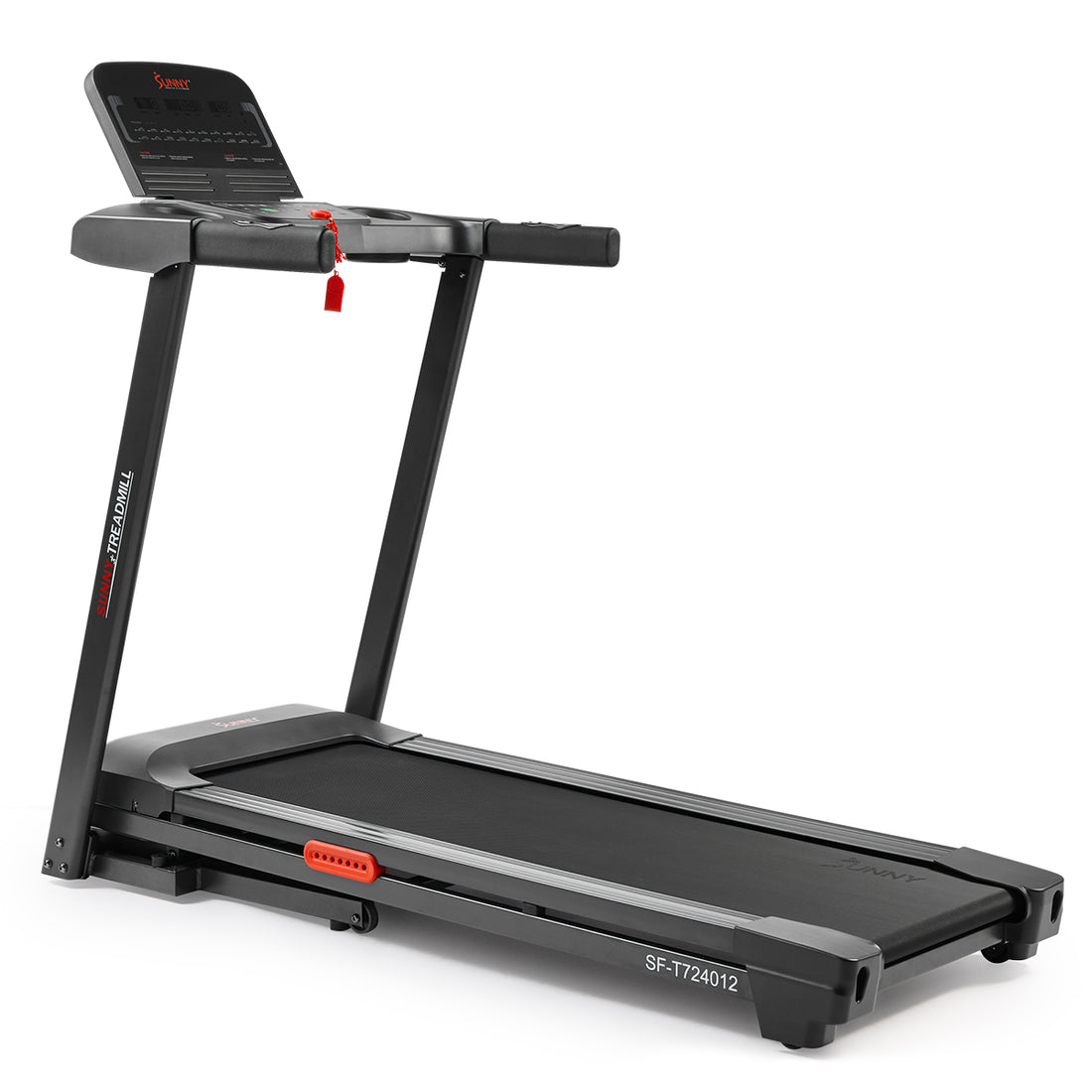
You don’t need equipment to warm up for a run. But if you prefer to warm up before you hit the road, a treadmill that can get up to speed for your fastest runs is key, like the Pace 500 Smart Treadmill (speeds up to 10 mph) or the Active 400 Smart Treadmill (up to 9 mph).
A high-quality yoga mat, like the Anti-Slip Exercise Yoga Mat, will keep you comfortable and clean during dynamic floor exercises and stretches like glute bridges and push-ups. Stretching tools like a Stretch Machine or Adjustable Slant Board are great for runners, but these static stretching machines are better saved for after a workout.
The Bottom Line
An effective running warm-up is much more than a few minutes of mindless jogging. It primes your body to run. Five to ten minutes of warming up is often all you need to increase your body temperature, get your heart, lungs, and muscles firing, and prepare your mind for the work ahead.
Prepping your body to work harder means you can perform your best from the start of your workout. Meaning: You won’t waste the first few minutes or work intervals of your run getting your body up to speed.
The best running warm-ups incorporate a combo of light running, dynamic exercises and stretches, running drills, and strides. But your exact workout (how intense and how long) should dictate what you ultimately include in your warmup routine.


Add Your Name & Email
Please enter your name and email to continue.We won’t display your email publicly.